If you’ve ever stood in a fabrication shop, surrounded by cranes hoisting steel plates and welders adjusting torches, you know not all pressure vessel steel is created equal. As someone who’s spent the last 12 years supplying ASTM/ASME-certified steel for reactors, storage tanks, and boiler components, the most common question I get from pressure vessel designers, fabricators, and inspection teams is: “When do I pick A516, and when do I go with A572?” It’s not a trivial difference—pick the wrong grade, and you’re looking at costly reworks, compliance delays, or even long-term safety risks. Let’s break this down like I would over a coffee in a shipping container yard, no dense jargon (well, a little jargon, but explained). ASTM/ASME Pressure Vessel Steel

First, let’s start with the basics: both are ASTM standard steels, and both are acceptable for pressure vessel construction per ASME BPVC (Boiler and Pressure Vessel Code) Section VIII, Division 1—one of the most widely used global codes for pressure vessel safety. But that’s where the similarity ends. ASTM A516 is a carbon-manganese steel specifically engineered for low-temperature service, right? Wait, no—more precisely, A516 is designed for pressure vessels operating at ambient and lower temperatures, where toughness is non-negotiable to prevent brittle fracture. It comes in four main grades: Grade 55, Grade 60, Grade 65, and Grade 70. The number is the minimum yield strength in ksi (thousand pounds per square inch). So Grade 70 is the strongest, with a minimum yield of 70 ksi and tensile strength of 70,000 to 90,000 psi. That’s the workhorse of A516, the one you’ll find on most hot water storage tanks, chemical reactors, and low-pressure steam drums.
Then there’s ASTM A572, a high-strength low-alloy (HSLA) steel. Wait, people often mix this up with A572 because it’s strong—but it’s not designed for the same low-temperature toughness or pressure vessel-specific load cases. A572 has five grades too: Grade 42, 50, 55, 60, 65, and 70. Again, the number is minimum yield strength, so Grade 50 is the most common here, with a 50 ksi minimum yield—surprisingly, that’s a whole 10 ksi stronger than A516 Grade 55, and on par with A516 Grade 60, with a lighter weight. The big selling point for A572 is its strength-to-weight ratio; you can use thinner plates to get the same structural capacity, which cuts down on material costs and shipping weight. But here’s the catch: A572 wasn’t written with pressure vessel-specific toughness requirements, and that’s where the line gets blurry (and dangerous if you cross it).
Let’s talk material chemistry, because that’s the root of all the differences. A516 is a straight carbon-manganese steel, with carbon content ranging from 0.18% to 0.30% depending on the grade. The alloy additions are minimal—just small amounts of silicon, copper, and sometimes nickel or chromium for toughness, all optimized for weldability and impact resistance at low temperatures. The key here is that A516 is normalized, right? Wait, no—A516 is usually supplied in the as-rolled condition, but many grades are thermomechanically controlled processed (TMCP) or normalized to ensure uniform grain structure. That uniform grain is what gives it that sharp-toughness at low temperatures. For example, A516 Grade 70 is required to pass Charpy V-Notch (CVN) impact testing at -20°F (-29°C) with a minimum of 20 ft-lbs of energy per sample. That’s a critical test for pressure vessels, because at low temperatures, even a small crack can propagate catastrophically if the steel isn’t tough enough.
A572, on the other hand, is a HSLA steel, so it has small additions of alloying elements like niobium, vanadium, or titanium that refine the grain and boost strength without adding much weight. But the catch here is that A572 doesn’t require the same impact testing as A516. Most A572 grades are only required to pass tensile and yield strength tests, no CVN at low temperatures. Some grades are for structural applications, not pressure vessels at all. So if you use A572 Grade 50, which is strong, to build a pressure vessel that will operate at -40°F in a remote Alaska chemical plant, you’re rolling the dice—no one can guarantee it won’t fracture under pressure, even if it meets strength specs at room temperature.
Now, let’s get to the applications, because that’s where most people need to see real-world examples. I’ve seen A516 on tanks holding liquefied natural gas (LNG) at -25°F, reactors holding caustic soda at 150 psi and 200°F, and steam drums in power plants. It’s the go-to when you need reliable toughness and weldability, and you don’t want to risk a code non-compliance. I once had a fabricator client who tried to use A572 Grade 50 for a small pressure vessel for a food processing plant’s ammonia storage. He got away with it because the operating temperature was 70°F, and the pressure was only 100 psi—no problem, because the conditions were mild, and he could document the strength. But when he tried to use the same A572 for a new CO2 storage tank for a brewery, the inspector shut him down. CO2 storage tanks can get as cold as -20°F when the pressure drops, and A572 didn’t have the required toughness for that service. The rework cost him $12,000 and a 3-week delay—all because he picked the wrong steel without checking the code requirements.
What about weldability? That’s another big one for fabricators, because bad welds are the number one cause of pressure vessel failures. A516 is designed to be weldable with minimal preheating, even for thick plates. The low carbon content means you don’t have to worry about hardening in the heat-affected zone (HAZ), which is where most weld cracks form. A572, while generally weldable, has higher strength from those alloying elements, so thicker plates might require preheating to prevent cracking. Also, some A572 grades aren’t recommended for high-heat input welding, which is common in large pressure vessel fabrication. I always tell my clients: if you’re doing heavy, high-heat welding for a pressure vessel, stick to A516 for simpler welding procedures, or check with your welding engineer before choosing A572.
Then there’s the pressure vessel code compliance, which is non-negotiable. ASME BPVC Section VIII, Division 1 explicitly allows A516 for pressure vessel construction, as long as it meets the specified tensile, yield, impact, and thickness requirements. A572—here’s the tricky part—can be used for pressure vessels only if it meets the supplementary requirements specified in ASME BPVC Section II, Part D, and has the required impact testing and other pressure vessel-specific properties. Most fabricators and inspectors prefer A516 because it’s already code-listed and has a long track record of compliance, so there’s less paperwork and less chance of being rejected during inspection. A572 requires extra testing and documentation, which adds time and cost to the project.
Thickness is another factor. A516 is available in plates up to 12 inches thick, though thicker plates require higher temperature testing. A572, while also available in thick plates, the grades designed for thicker sections often have higher carbon equivalents, which can hurt weldability and toughness. For pressure vessels that require thick walls to handle high pressure, A516 is usually the better choice because it’s proven to have consistent toughness even at thicknesses over 6 inches.
Wait, but what about when someone needs the strength of A572? Let’s be fair—A572 has its place. If you’re building a structural support for a pressure vessel, or a low-pressure tank operating at room temperature where weight is a concern, A572 Grade 50 is a great choice. It’s lighter, easier to ship, and meets all the requirements for structural components. But when it comes to the pressure-containing parts of the vessel—shell plates, heads, nozzles, and components that hold the pressure—stick to A516. I’ve had clients use A572 for structural parts and A516 for the pressure shell, which is a smart compromise: you get the strength where you need it for support, and the code-required toughness where you need it for pressure containment.
Let’s also address some common myths I hear all the time. First myth: “A516 is cheaper than A572.” That’s not always true. For thin plates (under 1 inch), A516 Grade 70 might be cheaper than A572 Grade 50, but for thicker plates, A572 can be more expensive because of the alloy additions. The second myth: “A572 is just a stronger version of A516.” No, it’s a different steel with different material properties, designed for different applications. You can’t substitute A572 for A516 in a pressure vessel without getting code approval and extensive testing. Third myth: “I can use A572 anywhere if it meets strength requirements.” As I mentioned earlier, strength is only part of the equation—low-temperature toughness is equally important, and A572 doesn’t have that as a standard requirement.
As someone who’s been in this business for more than a decade, I’ve seen what happens when people cut corners on steel selection. I’ve seen pressure vessels fail because the wrong steel was chosen for low-temperature service, costing lives, millions in damages, and putting fabricators out of business. On the flip side, I’ve seen projects go smoothly when designers and fabricators take the time to pick the right steel: A516 for pressure-containing parts, A572 for structural supports, always checking the operating temperature, pressure, and code requirements.
If you’re working on a pressure vessel project, don’t guess at the steel grade. Talk to your engineer, your inspector, and your steel supplier. I always tell clients: when in doubt, go with A516 for the pressure shell. It’s code-approved, well-understood, and has a proven track record. If you need the extra strength of A572, make sure it’s pressure-vessel-rated, has the required impact testing, and that your inspector signs off on it before you place an order.
At the end of the day, the difference between A516 and A572 comes down to purpose. A516 is a pressure vessel steel, plain and simple. It’s built to withstand the specific stresses of containing pressurized fluids, especially at low temperatures, with the toughness and compliance needed to meet global safety codes. A572 is a high-strength structural steel, optimized for weight and general structural applications, not for the specific demands of pressure vessel operation. Mixing them up isn’t just a mistake—it’s a safety risk.
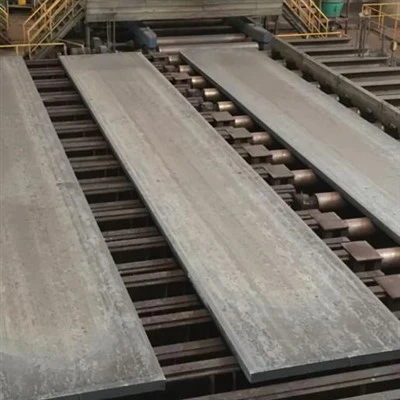
If you’re ready to source ASTM/ASME-certified pressure vessel steel, or have questions about which grade is right for your project, reach out to our team to discuss your requirements, get a quote, or clarify code compliance details. We work with fabricators, engineers, and plant operators across industries, and we’re here to help you make the right choice for safety, compliance, and cost.
EN High Strength Steel Plate References
- ASTM International. (2023). Standard Specification for Pressure Vessel Plates, Carbon Steel, for Moderate and Lower Temperature Service (A516/A516M-23a).
- ASTM International. (2023). Standard Specification for High-Strength Low-Alloy Columbium-Vanadium Structural Steel (A572/A572M-23).
- American Society of Mechanical Engineers. (2023). Boiler and Pressure Vessel Code, Section VIII, Division 1: Rules for Construction of Pressure Vessels.
- ASME International. (2023). ASME BPVC Section II: Materials, Part D: Properties (Metric) – Pressure Vessel Steels.
Gnee Steel (Tianjin) Co., Ltd.
As one of the most professional astm/asme pressure vessel steel manufacturers and suppliers in China, we also support customized service with low price. We warmly welcome you to buy high quality astm/asme pressure vessel steel in stock here from our factory. If you have any enquiry about free sample, please feel free to email us.
Address: No.4-1114, Beichen Building, Beicang Town, Beichen District, Tianjin, China
E-mail: alloy@gneesteelgroup.com
WebSite: https://www.chinavesselplates.com/
