If you’ve ever walked into a cement plant, a mining concentrator, or a paint production facility, chances are you’ve spotted a ball mill running in a corner—its rotating cylinder cascading steel balls, clanking, and humming as it grinds raw material into fine powder. As a grinding media supplier who’s worked with plant operators and maintenance teams for over a decade, I can tell you this: one of the most common questions I get isn’t about what grinding balls we sell. It’s about how to get the right amount of those balls into the mill in the first place. Too little, and the mill will run inefficiently—taking twice as long to grind, wasting energy, and underdelivering on product. Too much, and you’ll clog the mill’s lifters, cause unnecessary wear on the liners and bearings, and risk downtime that costs you thousands. Grinding Media
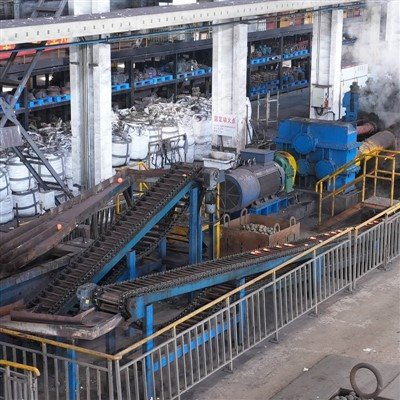
That’s why calculating the required grinding media charge isn’t just a technical task—it’s the foundation of a mill’s performance. Over the years, I’ve seen plant teams guess at the charge size, tweak it based on trial and error, and sometimes even lose money because they never got it right. Today, I want to break down the science behind this calculation, explain the common pitfalls, and share the practical steps I walk teams through when they come to me for help. Because at the end of the day, the right media charge isn’t just numbers on a page—it’s how you keep your mill running smoothly, cut costs, and get the product your customers expect.
First, let’s make sure we’re on the same page with terms that get tossed around a lot. The “grinding media charge” simply means the total volume (or weight) of grinding balls you load into the mill. It’s usually expressed as a percentage of the mill’s total internal volume, because volume is easier to measure during maintenance stops than weight. But there’s a key distinction here: the “mill’s internal volume” isn’t just the space inside the cylinder. It’s the void space left after accounting for the mill’s liners and the lifter bars that lift the balls as the cylinder turns. Skip that detail, and your calculation will be off before you even start.
Let’s start with the basics of the physics. A ball mill works by lifting grinding balls to a certain height and then letting them cascade or fall onto the material inside. The optimal charge fills about 40% to 50% of the mill’s void volume. If it’s less than 40%, there aren’t enough balls to impact and grind the material effectively. If it’s more than 50%, the balls can’t fall freely—they’re just sliding against each other, which leads to abrasion instead of impact, and that’s way less efficient. For most wet grinding mills (used in mining and mineral processing), the sweet spot is around 40%, while dry grinding mills (cement, powder paint) often run at 45% because the dry material doesn’t add the same buoyancy that slurry does in wet mills. That’s a quick rule of thumb, but let’s go deeper into the formula to get exact numbers.
The standard formula for calculating the grinding media charge weight relies on three key numbers: the mill’s internal volume (adjusted for liners), the charge volume percentage you’re targeting, and the bulk density of your grinding media. Bulk density is how much a given volume of grinding balls weighs—for forged steel balls, that’s roughly 4.8 to 5.1 tons per cubic meter, and for cast steel, it’s around 7.0 to 7.8 tons per cubic meter. The difference here is important, because mixing ball types will throw off your weight. For example, if you use both forged and cast balls, their bulk densities are different, so you can’t just add their volumes together without adjusting for weight.
Let’s walk through an example to make this real. Suppose you have a ball mill that’s 3 meters in diameter and 4 meters long. First, calculate the internal volume. The formula for the volume of a cylinder is π × (radius)² × length. The radius here is half the diameter, so 1.5 meters. So the total volume of the cylinder is 3.1416 × (1.5)² × 4 = 28.27 cubic meters. But wait—this is the gross volume, not the void volume. Most mill liners add about 10% to 15% to the internal diameter, so we need to subtract that to get the void space. Let’s use a 12% liner allowance, so the void volume is 28.27 × (1 – 0.12) = 24.88 cubic meters. Now, if we’re targeting a 40% charge volume, that’s 24.88 × 0.40 = 9.95 cubic meters of grinding balls. If we’re using forged steel balls (bulk density 5.0 tons per cubic meter), the weight is 9.95 × 5.0 = ~49.75 tons. That’s your baseline.
But here’s where I see most teams go wrong: they use gross volume instead of adjusted void volume, or they ignore the mill’s speed. The mill’s rotational speed matters because it determines how high the balls are lifted. The “critical speed” is the speed at which the balls would stick to the inside of the cylinder, never falling, so they don’t grind anything. Most mills run at 65% to 75% of critical speed. If your mill runs on the higher end of that (near 75%), you can get away with a slightly higher charge (up to 48% of void volume) because the faster rotation means the balls are lifted higher, creating more impact. If your mill runs at 65% critical speed, stick closer to 40% to avoid clogging the lifters. I’ve had teams calculate a 50% charge for a mill that runs at 60% critical speed—they ended up with a mill that barely turned, and they had to dig out half the balls on the next shutdown, losing a week of production. That’s a $100,000+ mistake, easy.
Another common factor is the size distribution of your grinding media. You can’t just load all the same size balls. Your feed material has different particle sizes—coarser feed needs bigger balls to impact them, while finer product needs smaller balls for abrasion. The standard rule here is that the largest ball size should be about 1/100 of the mill’s diameter. For a 3-meter diameter mill, that’s 30 mm balls, and smaller balls (like 20 mm, 10 mm, or even 5 mm for fine grinding) make up 30% to 40% of the charge volume. If you use too many small balls, they’ll get trapped between the big ones and not reach the coarser material, so your grind will be uneven. If you use too many big balls, they’ll overgrind the coarse material and undergrind the fine, leading to inconsistent product. I once worked with a paint manufacturer who was getting inconsistent particle size on their white pigment—they were using only 40 mm balls, and the fine particles were all clumping. We added 15 mm balls to their charge, and their product uniformity jumped 20% without any extra energy use.
Now, let’s talk about real-world adjustments that come from experience. The formula gives you a starting point, but every mill is a little different—liners wear down over time, so the void volume increases a tiny bit each time you replace liners, and the mill’s drive system might have slightly less torque than when it was new. The best way to fine-tune your charge is to do a “mill load test” during a planned shutdown. Here’s how I walk teams through that: first, shut down the mill and lock out power so it’s safe. Mark the current level of the balls on the inside of the cylinder. Then, add a small amount of balls (5% of the charge) and run the mill for an hour at normal speed. Stop it, mark the new level, and check if the balls are flowing freely around the mill—if there’s any clumping or if the lifters are fully covered, you’re overcharged. If the balls are only cascading a little, you need more. For wet mills, also check the slurry level—if the slurry is rising above the top of the balls, your charge is too high. That test takes a couple of hours, and it’s way more accurate than any formula, because it accounts for your specific mill’s wear and operating conditions.
I also want to address a question I get all the time: should I calculate charge by volume or weight? For day-to-day operations, weight is easier because you can order by the ton, and your supplier delivers a set amount. But volume is more accurate for loading, because different ball sizes and types have different bulk densities. For example, a ton of 10 mm balls takes up more volume than a ton of 50 mm balls, because the smaller balls have more void space between them. So if you’re using a mix of sizes, you can’t just use weight—you need to adjust for volume. That’s why when I supply grinding media, I always give customers both the total weight and the recommended volume, so they can cross-check.
Now, let’s cover the maintenance side, because your media charge isn’t a set-it-and-forget-it number. As balls wear down over time, they get smaller, so your charge volume will decrease by 1% to 2% per month, depending on the material you’re grinding and the hardness of the balls. For example, grinding abrasive material like quartz will wear balls faster than soft limestone, so you’ll need to add new balls more often. When you add new balls, you shouldn’t just top up the charge—you should replace worn balls with the correct size distribution. If you’re adding all big balls, you’ll throw off the balance, and if you’re adding all small balls, you’ll end up with too many small ones. I recommend keeping a log of your charge level, ball sizes, and mill performance (energy use, product size, downtime) so you can spot trends. If your energy use starts going up and your product size is coarser, it’s probably time to adjust your charge or replace worn balls.
Let’s also talk about common mistakes I’ve seen that derail even the most careful calculations. First, mixing different types of grinding media. If you use forged steel balls and cast steel balls together, their different hardness and bulk density will cause uneven wear. Cast balls are harder, so they don’t wear as fast, but forged balls have better impact resistance. Mixing them means some balls will be too small while others are still too big, and your charge will be inconsistent. Second, ignoring the mill’s discharge grate. If the grate openings are too small, they’ll trap balls inside, so your actual charge is higher than you calculated. If the openings are too big, you’ll lose small balls through the grate, so your charge will decrease over time. Third, not accounting for the moisture in wet grinding mills. Slurry adds buoyancy to the balls, so a wet mill will have a lower effective charge—about 5% less volume than a dry mill with the same steel balls. I’ve had teams use a dry mill charge calculation for a wet mill, and they ended up with a mill that ran too slow, because the slurry was supporting too much of the ball weight.
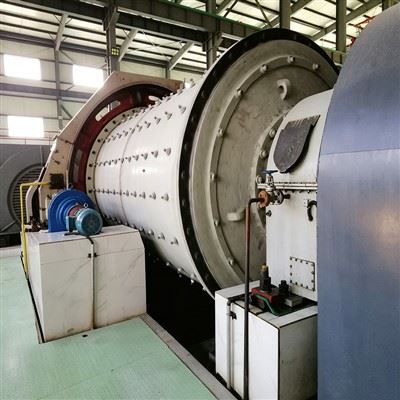
At the end of the day, calculating the right grinding media charge is a mix of science and practical experience. The formula gives you a solid starting point, but tuning it to your mill’s specific conditions will give you the best results. If you’re unsure about your current charge, or if you’re looking to optimize your mill’s performance, don’t guess at it. Grinding media isn’t just a product we sell—it’s a solution we help you get right, because when your mill runs smoothly, we both win. If you’re ready to review your current charge, adjust your setup, or ask about the right grinding media for your operation, we’re here to work with you to find the numbers that work for your mill.
Coupling References
- Wills, B. A., & Finch, J. A. (2016). Wills’ Mineral Processing Technology: An Introduction to the Practical Aspects of Ore Treatment and Mineral Recovery. Elsevier.
- Napier-Munn, T. J., Morrell, S., Morrison, R. D., & Kojovic, T. (1996). Mineral Comminution Circuits: Their Operation and Optimisation. Julius Kruttschnitt Mineral Research Centre.
- Gaudin, A. M. (1939). Principles of Mineral Dressing. McGraw-Hill Book Company.
- Mular, A. L., & Bhappu, R. B. (1980). Mineral Processing Plant Design. American Institute of Mining, Metallurgical, and Petroleum Engineers.
Shenyang Muren Machinery Co., Ltd.
As one of the most professional grinding media manufacturers and suppliers in China, we’re featured by quality products and good price. Please rest assured to wholesale durable grinding media from our factory. We also accept customized orders.
Address: No.16 Nansan Road, Shenyang Jinhai Economic Zone, Liaoning Province, China
E-mail: mulunjixie@163.com
WebSite: https://www.symurens.com/
