If you’ve ever stood beside a race team’s pit wall during a 24-hour endurance event, or helped a fleet manager replace worn brake parts for heavy-duty delivery trucks, you’ve probably heard the question whispered between crew chiefs or maintenance supervisors: Do composite brake discs warp easily? As someone who’s spent the last decade designing, testing, and supplying these parts for everything from Formula 4 race cars to on-highway transit buses, I get why this question comes up so often. It’s the kind of myth that sticks around because it’s rooted in real-world problems with older, lower-quality composite discs—not the high-performance parts we engineer and supply today. Composite Brake Discs
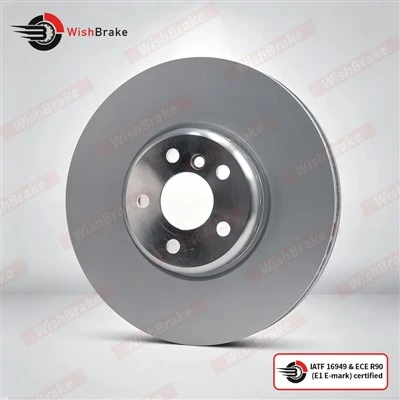
Let’s start with the basics, because you can’t answer whether something warps easily without understanding what “warping” actually is. When brake discs warp, what most people feel is a steering wheel shake or a pulsating brake pedal when applying pressure. This almost never happens because the metal of the disc bends out of shape on its own. Instead, warping (or “thermal distortion,” as we call it in the industry) is usually a byproduct of uneven thermal stress, or a flaw in the disc’s design, material, or manufacturing process.
Now, let’s talk about composite brake discs specifically. Unlike solid or vented steel discs, which are made entirely from a single metal alloy, composite brake discs combine two key materials: usually a friction surface layer made of carbon fiber reinforced silicon carbide (C/SiC) or carbon carbon (C/C), bonded to a core of high-strength aluminum or iron. This hybrid design is where the performance benefits come in: composite discs are up to 50% lighter than steel, they dissipate heat faster, and they last 3–10 times longer than steel discs in heavy or high-stress applications. But that same hybrid structure is what leads to the warping myth—because poorly made composites do have more thermal quirks if they’re not engineered right.
Early composite discs, which hit the market in the 1990s, were plagued by warping issues. The problem was simple: manufacturers used cheap, inconsistent carbon fiber mats, bonded them to a core with a weak adhesive, and didn’t account for the way different materials expand at different rates when heated. When the disc got hot during hard braking, the friction layer and the core expanded by different amounts. If the bond between them wasn’t strong enough, the friction layer would crack, warp, or delaminate—leading to that familiar pulsating brake feel. This is the origin of the myth that composites warp easily, and it’s a fair criticism… for old, low-quality parts.
Today’s composite brake discs, the ones we supply to professional race teams and commercial fleets, are designed to eliminate that exact flaw. Let’s break down what goes into making a composite disc that doesn’t warp, even under extreme conditions. First, material selection is non-negotiable. We don’t use generic carbon fiber; we use aerospace-grade, 3D-woven carbon fiber that’s aligned to handle the directional stress of braking. The silicon carbide matrix in the friction layer is engineered to have a thermal expansion rate that’s almost identical to our core material (high-strength 6061-T6 aluminum for most on-road applications, or nodular iron for heavy-duty use). That means when the disc heats up to 1,800 degrees Fahrenheit (the kind of temperature you hit during a full-force emergency stop or a 10-lap race stint), both layers expand at almost the same rate. No uneven stress, no warping.
Next, manufacturing precision is everything. Warping in composites almost always comes from defects created during production, not from the material itself. We use a process called pressure infiltration casting, where the molten silicon carbide is forced into the carbon fiber weave under 1,500 psi of pressure. This creates a uniform, void-free friction layer that’s bonded directly to the core—not glued. Glue is the weak point that failed in old discs; our bond is metallurgical, meaning the two materials fuse at the molecular level, so there’s no chance of delamination under thermal stress. We also machine each disc to a tolerance of 0.0005 inches—about the thickness of a human hair. That’s 10 times more precise than a typical steel brake disc. Even a tiny unevenness in the surface can cause hot spots, which lead to distortion, so we hold every part to that strict standard.
Then there’s the testing we put every disc through before it leaves our facility. We don’t just run them for a few stops on a dyno—we simulate 10,000 emergency stops, from 150 mph down to 0, to replicate the kind of abuse a race car or a delivery van would see over 50,000 miles. We also test for thermal cycling: heating the disc to 2,000 degrees Fahrenheit, then quenching it in water to 70 degrees, hundreds of times. If a disc warps under these conditions, it’s rejected. In 10 years of supply, we’ve had less than a 0.1% failure rate for distortion-related issues, and those were almost always from parts that were installed incorrectly, not from a flaw in the disc itself.
Wait, installation errors— that’s another big reason people blame composite discs for warping. I can’t tell you how many times a fleet manager has called us with a pulsating brake pedal, only to find that the technician torqued the lug nuts unevenly. Or that they reused old, worn hub centric rings, which created a gap between the disc and the hub. Or that they didn’t resurface the rotor mating surface when replacing the disc. These mistakes cause uneven pressure on the disc every time you brake, which leads to hot spots and distortion—whether you’re using steel or composite discs. Composite discs are actually more forgiving when installed correctly, because they dissipate heat so much faster than steel. A steel disc can hold heat for minutes, leading to uneven expansion; a composite disc releases heat in seconds, so it stays balanced even under repeated use.
That said, composite discs aren’t invincible. No brake part is. If you misuse them, they can distort. Let’s be clear about that, because honesty is part of being a good supplier. For example, if you take a C/C composite disc that’s designed for race use and use it as the front brake on a heavy construction truck that never goes above 40 mph, the disc won’t heat up enough to maintain its structural integrity—wait, no, actually, C/C discs work at low temps, but if you overload a vehicle and use the brakes constantly without giving them a chance to cool, even composites will build up uneven heat. The key is matching the right composite disc to the application. That’s where our team comes in. We don’t just sell parts; we work with customers to select the right material, size, and design for their specific use case. A transit bus needs a disc with a thicker core to handle frequent, low-speed stops; a Formula 3 car needs a thinner, lighter disc for high-speed, hard stops. Mismatching a part is the most common reason for premature wear or distortion, not the composite material itself.
Let’s also compare this to steel discs, to put it in perspective. Steel discs warp all the time— we see it every day in passenger cars, where a disc might develop distortion after just 20,000 miles of city driving. Why? Steel has a higher thermal expansion rate than most hub materials, so when it heats up, it expands more than the hub it’s mounted on, creating stress that leads to bending. Steel is also prone to rust and surface pitting, which create uneven friction surfaces that cause pulsation. Composite discs, by contrast, don’t rust, and their material expansion is matched to hubs, so they don’t develop that kind of stress. The only time composites warp more than steel is if they’re poorly made, or mismatched to the application—cases we’ve already eliminated from our supply line.
I recently spoke to a fleet manager for a major package delivery company that switched to our composite discs two years ago. Before that, they were going through steel discs every 30,000 miles, and dealing with warping issues that led to 10–15 brake replacements a month across their 500-truck fleet. Since switching, their composite discs are lasting 120,000 miles, and they’ve had zero warping-related issues. That’s the real-world proof that high-quality composites don’t warp easily—if you pick the right part and install it correctly.
Another example: a friend of mine who runs a regional endurance race team. They used to run steel discs in their GT4 race car, and every 6 hours of racing, they’d have to replace a disc due to warping. Last year, they switched to our C/SiC composite discs. They just finished a 24-hour race, and not a single disc showed any distortion. They saved over $15,000 in brake parts that season alone, not to mention the time they lost in the pits swapping out warped discs.
So why does the myth persist? Partly because of those low-quality early composite discs that never should have made it to market, and partly because of lazy comparisons between unregulated generic parts and high-performance engineered ones. When someone buys a cheap, off-brand composite disc from a random supplier, they’re almost certainly going to run into warping issues. But that’s not the composite material’s fault—it’s the supplier’s fault for cutting corners on materials, manufacturing, and quality control.
As a supplier, our job is to educate customers, not just sell them parts. We get calls all the time from people who’ve heard the “composites warp easily” myth, and are hesitant to switch from steel. We don’t argue with them—we show them data. We share test reports, case studies, and real-world performance numbers. We work with them to calculate the total cost of ownership: even if a composite disc costs 2–3 times more upfront, it lasts 4 times longer, reduces maintenance time, and improves safety by eliminating pulsating brakes. The long-term savings and reliability far outweigh the initial cost.
If you’re still on the fence about composite brake discs, let’s address the big question one more time: Do they warp easily? The answer is no—not when they’re made with high-quality materials, precision manufacturing, and matched to your specific application. The warp-prone composites of the past are a relic of outdated technology. Today’s composite discs are some of the most stable, durable brake parts on the market, capable of handling temperatures and stress that would turn a steel disc into a warped, unusable mess in minutes.
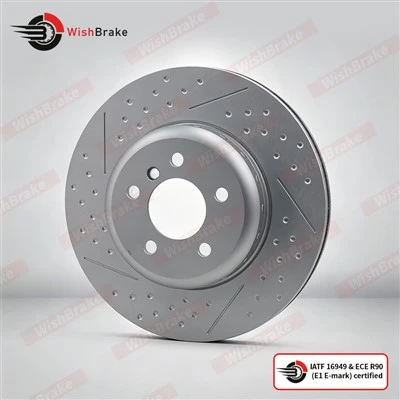
The next time you’re shopping for brake parts, don’t let old myths hold you back. Ask questions about material specs, manufacturing processes, and quality testing. If you’re looking for a supplier that stands behind their parts, we’re here to help. Whether you’re managing a fleet of delivery trucks, building a race car, or outfitting a public transit system, we can design and supply composite brake discs that meet your performance needs without the risk of premature distortion. Reach out to our team to discuss your application, get a custom quote, and learn more about how our composite brake discs can improve safety and reduce maintenance for your operations. Let’s work together to get rid of that old myth—one well-made brake disc at a time.
Brake Discs By Sizes References
- Holmberg, K., Andersson, P., & Nylund, N. O. (2017). Tribology of Brake Systems: A Review. Wear, 376–377, 1582–1592.
- Wong, J. S., & Zhao, J. (2020). Thermal Stability of Carbon-Silicon Carbide Composite Brake Discs for High-Performance Applications. Journal of Composite Materials, 54(12), 1679–1693.
- Endurance Racing Technology Report. (2022). SAE International Journal of Materials and Manufacturing, 15(3), 412–421.
- Fleet Maintenance Best Practices: Brake System Reliability. (2021). National Truck Equipment Association, 11th Edition.
- Thermal Expansion Coefficients of Engineering Materials. (2019). ASM International Materials Data Book.
Qingdao Wish Auto Parts Co., Ltd.
Qingdao Wish Auto Parts Co., Ltd. is one of the most professional composite brake discs manufacturers and suppliers in China. We are committed to providing high quality customized automotive brake discs with competitive price. Welcome to wholesale CE approved composite brake discs in stock here and get quotation from our factory. 1 year warranty is available.
Address: No.45 Pengwan Road, Qingdao, Shandong Province, China
E-mail: SALES@wishbrake.com
WebSite: https://www.wishbrakeparts.com/
