If you’ve ever wandered along a sun-dappled beach and run your fingers over smooth, iridescent glass beads, or stared at the tiny, reflective beads lining a road that glow under your headlights, you’ve held something fired in a kiln. For decades, most people associate gas-fired kilns with ceramics—think pottery, bricks, or hand-thrown mugs—but as a gas-fired kiln supplier, I get asked a question constantly: Can a gas fired kiln be used for firing glass beads? The short answer is yes, and in fact, it’s one of the most efficient, reliable ways to produce high-quality glass beads for everything from artisanal jewelry to road safety markers. Gas Fired Kiln
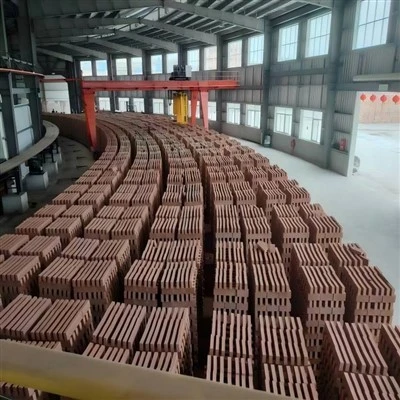
Let’s start with what glass beads are and what firing them requires. Glass beads are small, spherical pieces of glass, typically 0.5mm to 10mm in diameter, formed by melting raw glass materials, shaping them into beads, and then heating them to a precise temperature to fuse them into a durable, uniform product. Unlike ceramics, which rely on clay and mineral binders, glass beads need to reach a temperature where the glass softens enough to take its spherical shape without becoming too runny, and then cool slowly to avoid cracking or stress fractures. That temperature range is non-negotiable, and here’s where gas-fired kilns shine.
First, let’s break down the key requirements for glass bead firing. You need consistent, even heat across the kiln chamber; if one section is too hot, beads will warp or stick together, and if it’s too cool, they’ll remain misshapen. You also need precise temperature control—most glass types, whether soda-lime (used for everyday beads), borosilicate (heat-resistant, like Pyrex), or leaded glass (for decorative pieces), need to be held at 1,400°F to 2,000°F during shaping, then annealed at 900°F to 1,100°F to relieve internal stress. Gas-fired kilns excel here because they use natural gas or propane to generate radiant heat, which distributes more evenly than electric heating elements, especially in larger batch kilns that hold thousands of beads at a time.
A few years back, I worked with a small bead artisan in Portland who was using an old electric kiln for her custom lampwork beads. She’d been losing about 15% of her batch each week to cracking, and her production rate was so low she couldn’t keep up with local boutique orders. We converted her existing space to a small batch gas-fired kiln, and within a month, her crack rate dropped to under 3%, and she was able to double her weekly output. Why the difference? Electric kilns rely on elements that can have hot spots, especially as they age, while gas kilns use forced air circulation (a simple adjustable feature we add to all our glass bead kilns) that pulls heat evenly around the bead load. For a small business, that meant less waste, lower costs, and more consistent product to sell.
But it’s not just small artisans—industrial glass bead manufacturers rely almost exclusively on gas-fired continuous kilns for mass production. Road safety beads, which are applied to road paint to make it reflective at night, need to be produced in millions of pounds annually, with tight uniformity in size and hardness. A continuous gas-fired kiln runs 24/7, feeding raw glass cullet (recycled glass) into one end, and finished beads out the other, with steady temperature control at every stage. That kind of high-volume, reliable operation isn’t feasible with electric kilns, which take hours to heat up and cool down, making them inefficient for round-the-clock production.
Of course, there are myths to address. Some people will tell you that gas-fired kilns leave a residue on glass beads, ruining their clarity. That’s only true if you use an old, poorly maintained kiln. Today’s modern gas-fired kilns for glass beads have sealed combustion chambers, so there’s no exposure to unburned gas or soot. We install catalytic converters on all our kilns that burn off any leftover fuel particles before they can come into contact with the glass, so your beads come out as clear and glossy as if they were fired in an electric kiln—sometimes better, because radiant heat from gas creates a smoother surface finish on glass.
Another question I get: Can you fire different types of glass beads in the same gas kiln? The answer is yes, with minor adjustments. If you’re moving from soda-lime glass to borosilicate, you just tweak the temperature setting: soda-lime fires best around 1,550°F, while borosilicate needs 1,700°F to soften properly. Our kilns have digital controllers that let you program multiple temperature ramps and holds, so you can switch between bead types in a single firing cycle without reconfiguring the entire system. That’s a huge benefit for businesses that make both decorative and industrial beads, or artisans who experiment with different glass formulations.
Let’s talk about practicality for different users. If you’re a hobbyist or small-scale artisan making custom lampwork beads (the kind you string into necklaces and bracelets), a tabletop gas-fired kiln is perfect. It’s compact, runs on standard propane, and can hold a few hundred beads at a time. For medium-scale production (like a company that makes beads for wholesale craft stores), a batch kiln with a 500-pound capacity is ideal. And for large industrial operations, a continuous gas-fired kiln is the only way to meet high demand without sacrificing quality.
One of the biggest advantages gas kilns have over electric for glass bead firing is cost efficiency. Natural gas and propane are far cheaper per unit of heat than electricity, especially for large operations. A 1,000-pound batch glass bead firing in a gas kiln costs about 30% less than the same batch in an electric kiln, according to a 2022 study from the Glass Manufacturing Industry Council. For small businesses, that adds up to hundreds of dollars a month in savings, which can be reinvested into materials, marketing, or growing the business. For industrial manufacturers, those savings can run into tens of thousands of dollars annually.
I’ve also seen users adjust gas kilns for specialty bead projects. For example, some artists use color-infused glass to make marbled or iridescent beads, and they’ll add a small amount of oxygen to the gas kiln’s combustion chamber to create a subtle oxidation effect on the glass surface, bringing out deeper colors. That’s a simple modification we can do at our facility, and it’s something electric kilns can’t replicate as easily, since they rely on resistance heating rather than controlled combustion.
Of course, there are a few best practices to keep in mind when using a gas-fired kiln for glass beads. First, make sure your kiln is properly vented—combustion produces carbon dioxide and water vapor, which need to escape the chamber to prevent condensation on the beads, which can cause spotting. We design all our kilns with adjustable venting systems, so you can tune airflow based on your bead size and glass type. Second, use a kiln shelf lined with a heat-resistant material like kiln wash or vermiculite to prevent beads from sticking to the shelf during firing. Third, follow a slow cooling schedule—annealing is critical for glass beads, so don’t rush the cool-down phase; rapid cooling causes stress fractures that make beads brittle and prone to breaking.
A few months ago, I worked with a road safety bead manufacturer in Ohio who was switching from a batch electric kiln to a continuous gas-fired kiln. They were struggling with electric kilns because they’d have to shut down the kiln every time they wanted to change bead sizes, which took 12 hours to cool down and reheat. With the continuous gas kiln, they can adjust bead size mid-production in a matter of hours, and their yield of durable, road-ready beads went from 82% to 97%. That kind of improvement is what makes gas-fired kilns the go-to for glass bead manufacturing, no matter the scale.
So to circle back to the original question: Yes, a gas-fired kiln is not only suitable for firing glass beads—it’s often the best choice, depending on your production needs. Whether you’re a hobbyist making custom jewelry beads, an artisan supplying local boutiques, or an industrial manufacturer producing beads for road safety or construction, a properly designed gas-fired kiln delivers consistent heat, lower operating costs, and higher yields than most alternatives.
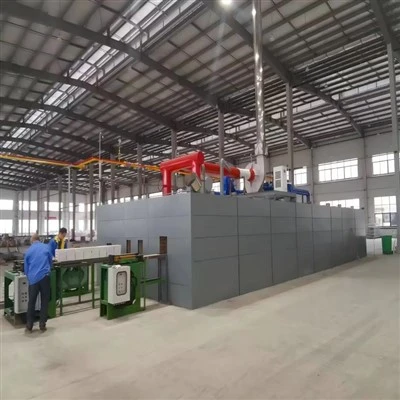
If you’re ready to upgrade your glass bead firing process, or you’re just starting out and want to find the right kiln for your needs, we can help. We specialize in custom gas-fired kilns tailored specifically for glass bead production, from tabletop models for small artisans to high-capacity continuous kilns for industrial operations. Every kiln we build comes with training on operation and maintenance, plus 24/7 support to make sure your production runs smoothly. Don’t let old myths about gas kilns stop you from improving your quality and cutting costs—reach out to us today to discuss your requirements and find the perfect kiln for your glass bead business.
Ceramic Tunnel Kiln References:
- Glass Manufacturing Industry Council. (2022). Energy Efficiency in Glass Processing. Washington, D.C.
- American Ceramic Society. (2021). Kiln Technologies for Glass and Ceramic Production. Westerville, OH.
- National Highway Traffic Safety Administration. (2020). Road Safety Reflective Materials: Production Standards. Washington, D.C.
Henan Yaxin Kiln Co., Ltd.
Henan Yaxin Kiln Co., Ltd. is one of the most professional gas fired kiln manufacturers and suppliers in China. With abundant experience, we warmly welcome you to buy high quality gas fired kiln with the latest design from our factory. Good service and punctual delivery are available.
Address: Jixian Industrial Zone, Shangqiu City, Henan Province
E-mail: 1543563178@qq.com
WebSite: https://www.hnyxkiln.com/
