If you’ve ever walked through an auto parts factory, a warehouse assembling custom metal shelving, or a workshop building aerospace prototype components, you’ve probably spotted double-sided industrial tape holding two pieces of aluminum together. As a supplier who’s spent 12 years working directly with engineers, maintenance teams, and small business owners testing our tape, I hear the same question over and over: How does something that looks like a thin roll of adhesive actually stick to smooth, durable aluminum metal? It’s not just a random chemical trick—this process relies on careful material science, designed to solve a problem that old-fashioned fasteners (screws, rivets, welds) can’t: holding aluminum without drilling holes, adding unnecessary weight, or causing corrosion. Let me break down exactly how our double-sided industrial tape bonds to aluminum, from the chemistry of the adhesive to the small details that make the difference between a tape that holds and a tape that fails. Double-Sided Industrial Tape
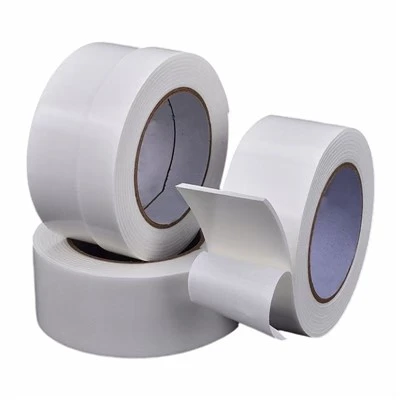
First, let’s talk about aluminum itself—because if you understand aluminum, you’ll understand why industrial tape can’t use the same adhesive that sticks to paper or plastic. Most people think aluminum is just smooth metal, but it has a secret: it’s almost always covered in a thin, invisible layer of aluminum oxide. This layer forms within minutes of aluminum being exposed to air, and it’s harder than the aluminum metal underneath, acting as a natural shield against rust and weather. But here’s the catch: that aluminum oxide layer is super non-pourous, and it repels most standard pressure-sensitive adhesives (the kind that sticks to your Post-It notes or packing tape). If you tried to slap regular double-sided tape on raw aluminum, it would peel off in a few hours, especially if that aluminum is in a hot garage, a freezing loading dock, or outside in rain and UV light. That’s why our engineering team doesn’t just pick an adhesive and roll with it—we test dozens of formulations every year specifically designed to overcome aluminum’s oxide layer.
The core of our double-sided industrial tape is the adhesive layer, which is a pressure-sensitive adhesive (PSA) made from a mix of acrylic monomers, tackifiers, and other custom additives we tweak based on the application. When this adhesive makes contact with aluminum, it doesn’t just sit on top of the oxide layer—it wicks into the tiny, microscopic irregularities of the aluminum surface. Wait, let’s clarify that: aluminum might look smooth to the naked eye, but if you look at it under a microscope, it’s full of tiny peaks, valleys, and micro-craters left over from the manufacturing process (like rolling, cutting, or polishing). For example, the aluminum sheets used in RV siding are cut with industrial shears, which leave a slightly rough edge; aluminum for aerospace is polished ultra-smooth, but it still has those tiny micro-voids. When you apply our tape, you press it down firmly (that’s why we recommend using a roller tool, not just your hands) to make the adhesive flow into those micro-spaces. This is called mechanical interlocking, and it’s one of the biggest reasons our tape sticks better than cheaper alternatives. It’s like how Velcro hooks into loops—instead of the adhesive just being flat against the aluminum, it’s anchored in those tiny holes, so it can’t peel off easily.
But mechanical interlocking alone isn’t enough, especially if your aluminum is going to be exposed to extreme temperatures or chemicals. The second step is something called chemical bonding. Our adhesive has polar functional groups (think of them as tiny chemical magnets) that attract the oxide layer on aluminum. Aluminum oxide has a chemical structure that loves to react with polar molecules, so the adhesive’s groups form weak, temporary chemical bonds with the oxide surface. These bonds aren’t as strong as the covalent bonds that hold the aluminum metal together, but they add a whole extra layer of hold, especially for heavy loads. For example, if you’re using our tape to hold aluminum brackets on a garage wall, those chemical bonds mean the tape doesn’t slip when you hang a shelf full of tools. It’s the difference between a temporary hold and a long-term bond that lasts years.
Now, let’s address a common myth I hear all the time: “I don’t need to prepare the aluminum before applying tape, right?” Wrong. Most of the time, that’s the #1 reason our customers come back complaining that the tape failed. Even though our adhesive is designed for aluminum, surface preparation matters more here than with many other materials. When aluminum is cut or handled, it gets covered in tiny traces of oil, grease, metal shavings, and even fingerprints. These contaminants create a barrier between the adhesive and the oxide layer, so neither mechanical interlocking nor chemical bonding can work properly. That’s why we always recommend our customers clean the aluminum surface first with an isopropyl alcohol wipe (at least 70% concentration) and let it dry completely before applying tape. For heavy-duty applications, like holding aluminum panels on a truck trailer, we even recommend light sanding with fine-grit sandpaper to rough up the oxide layer a little—this gives the adhesive even more micro-spaces to lock into. I remember a customer a few years ago who was using cheap off-brand tape to hold aluminum shelves in his warehouse; the tape kept peeling off, and he thought the tape was bad. Once he tried our tape and followed our surface prep instructions, his shelves stayed up, and he told me it was the “missing step he didn’t know about.”
Another big factor is the tape’s core construction, not just the adhesive. We make our double-sided industrial tape with a custom carrier layer, depending on what it’s being used for. For aluminum applications that need high flexibility (like bending aluminum for custom signs), we use a polyester carrier that’s thin but durable. For applications that need extra strength (like holding large aluminum panels on building facades), we use a fiberglass-reinforced carrier that adds rigidity so the tape doesn’t stretch or deform under heavy load. The carrier also keeps the two adhesive layers evenly spaced, so when you apply it to aluminum, there’s no uneven adhesive that can cause weak spots. I always tell engineers to match the carrier to their aluminum use case: if you’re working with thin, bendable aluminum, a flexible carrier is key; if you’re working with thick, rigid aluminum, a stiffer carrier will give you better stability.
Temperature is another critical element that affects how well our tape sticks to aluminum. Aluminum expands and contracts a lot with temperature changes—this is called thermal expansion. If the adhesive and the aluminum expand at different rates, the bond can break over time. That’s why we formulate our adhesive to have a coefficient of thermal expansion that matches aluminum. So when it’s 90 degrees outside, the tape expands the same amount as the aluminum panel it’s holding, so there’s no stress pulling the two apart. In freezing temperatures, it contracts the same way, preventing gaps from forming. For example, a customer who uses our tape to hold aluminum siding on a farm told me last winter that the siding with our tape didn’t shift at all, while siding with competitor tape had small gaps where the adhesive couldn’t handle the cold expansion. That’s the kind of detail that comes from years of testing—we don’t just make tape that works in perfect lab conditions; we make tape that works in real-world environments, from 140-degree factory floors to -20-degree loading docks.
Wait, but what about when the aluminum is used for things that need to be repairable, like car body panels? A lot of our auto shop customers ask if our tape will stick to aluminum and still let them remove the panel later without damaging the metal. That’s why we developed a specialty automotive grade of our double-sided industrial tape. It’s formulated with a low-tack release layer that breaks the chemical bonds when you apply force, but only when you want it to. So if you need to replace a dented aluminum car panel, you can pull the tape off cleanly without leaving adhesive residue on the metal—no sanding or scraping needed. That’s a game-changer for auto body shops that used to spend hours removing rivets and repairing damage from drilling holes in aluminum.
I’ve been in this industry long enough to know that most people think industrial tape is a one-size-fits-all product. But when it comes to aluminum, that couldn’t be further from the truth. The tape that sticks to aluminum for a phone case will fail if you try to use it for a heavy-duty aerospace bracket, and vice versa. Our team works closely with every customer to understand their specific needs: how much weight are they holding? Will the aluminum be outside or inside? What’s the temperature range? Do they need to remove the tape later? That’s how we fine-tune the adhesive and carrier to create a bond that’s stronger than the aluminum itself.
A few months ago, I visited a manufacturing plant that builds custom metal shelving for grocery stores. They were using screws and rivets to hold the aluminum shelves together, and each shelving unit took three hours to assemble, plus they had to pay for parts and labor to drill all the holes. They tried our double-sided industrial tape on a test unit, and it cut assembly time down to 20 minutes per unit. The plant manager told me he saved over $100,000 a year in labor and part costs, and the shelves have held up for 18 months without any issues. That’s the power of a good bond between tape and aluminum—it’s not just about holding two pieces together; it’s about making work easier, cheaper, and more durable.
If you’re working with aluminum—whether it’s for auto parts, construction, aerospace, or custom projects—and you’re tired of fasteners that add weight, cause corrosion, or take too long to install, our double-sided industrial tape is designed specifically for your needs. We’ve spent years perfecting the chemistry, testing the surface prep, and matching carriers to aluminum applications, so you don’t have to guess if the tape will hold. If you’re ready to talk about your project, our team is here to help you pick the right tape, answer any questions about installation, and make sure you get a bond that lasts.

To learn more about how our double-sided industrial tape adheres to aluminum and find the right solution for your project, contact our team to discuss your specific application needs.
Packaging Tape References
- Creighton, K. (2008). Adhesion Science: Principles and Practice. CRC Press.
- Edwards, L. (2019). Metal Surface Preparation for Adhesive Bonding. Journal of Adhesion Science and Technology.
- Kim, S. (2021). Pressure-Sensitive Adhesives for Metal Substrates. Industrial Adhesive and Tape Magazine.
- Nicalek, J. (2015). Thermal Expansion Matching in Industrial Adhesive Bonds. International Journal of Adhesion and Adhesives.
- Wang, H. (2020). Aluminum Oxide Layer Effects on Adhesive Bond Strength. Journal of Materials Science.
Haining Sunrich Adhesive Tape Products Co., Ltd.
As one of the most professional double-sided industrial tape manufacturers and suppliers in China, we also support customized service. Please feel free to wholesale high-grade double-sided industrial tape in stock here from our factory. Welcome to contact us for quotation.
Address: No. 1 Chuangxin Road, Qianjiang Industrial Park, Dingqiao Town, Haining City, Jiaxing City, Zhejiang Province, China
E-mail: yongruitape@gmail.com
WebSite: https://www.yongruii.com/
