If you’ve ever held a wrench that outlasted three hand tools, a gear that never slipped even under a month of nonstop factory shifts, or a bracket that held a rocket component steady through launch vibrations, chances are it was a forged part. As someone who’s spent the last 12 years running a forging shop (yeah, the one that never cuts corners on material or die specs), I get asked this question all the time: “What’s the maximum complexity of a forged part?” Forged Parts
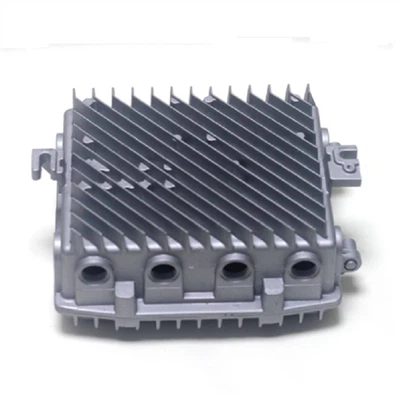
On the surface, forging sounds pretty straightforward. You heat metal up till it’s malleable, whack it with a die, and bam—part done. But anyone who’s actually stepped foot in a forging floor knows it’s way more nuanced than that. Complexity here isn’t just “how many curves are on the part?” It’s a mix of 3D geometry, material flow, tooling limits, and real-world cost. Over the years, I’ve seen customers come in with CAD files that look like a modern art masterpiece, only to realize halfway through quoting that their “super complex” part isn’t actually forgeable—because they forgot that metal doesn’t just move like Play-Doh.
Let’s break this down like we’re talking over a coffee at the shop break room. First, what counts as complex in forging? A basic round rod or a flat bracket is simple. But add in: undercuts that trap the metal mid-forge, thin walls that stretch too far, multiple steps that require precise material placement, or tiny, intricate features all in one part. That’s when complexity ramps up.
Ten years ago, the ceiling for maximum complexity was way lower. We were stuck with open-die forging for most intricate shapes, which left rough edges and required tons of machining. Then closed-die forging got a big upgrade—computational fluid dynamics (CFD) software that maps exactly how metal flows when you hit it, plus precision CNC machining for dies that can hold tolerances tighter than a teenager’s secret snack stash. Suddenly, parts that once needed 20+ machining operations could be forged in one hit, with features that used to be impossible.
I remember a big aerospace customer coming to us a few years back. They needed a titanium landing gear bracket with 17 unique features: two small mounting lugs that stuck up at 15-degree angles, a hollow section in the middle to cut weight, three internal ribs, and a tiny hole that had to line up perfectly with a gear housing. Their initial CAD file had all these features crammed into a 12-inch part. At first, we thought they were crazy—there was no way titanium would flow into such tight spaces without cracking or getting air pockets. But our team ran a flow simulation, tweaked the die design a little (added a pre-form step to push metal exactly where we needed it, not just whack the whole part at once), and adjusted the forging temp so the titanium stayed malleable longer. We pulled it off—first trial run was perfect, no cracks, all features aligned. That part is still in service today, and it’s way more complex than anything we would’ve touched back in 2010.
But here’s the catch: complexity has a hard limit, and it’s tied to three big factors. First, material behavior. Different metals play by totally different rules. Titanium, for example, is strong but unforgiving—thin walls or deep features will crack if the metal doesn’t flow smoothly. Steel is more forgiving, but it’s heavier, so complex parts made of steel might not be feasible for customers who need lightweight designs. Aluminum is great for automotive parts, but it’s soft enough that intricate edges can get messed up during forging. We once had a customer ask for a 6-inch aluminum part with 20 tiny, tooth-like features around its edge. The aluminum would’ve stretched too thin there, so we had to tell them no—they ended up switching to a hybrid forged-machined part instead.
Second, tooling and cost. Each complex feature adds time and money. Dies for a simple part might cost $2,000. A die for that aerospace bracket? $18,000. And every extra feature means more steps in the forging process: pre-forge, finish-forge, trimming, pressing, inspection. If you add in an undercut that requires a secondary die move, you’re looking at even more cost. Customers get excited about complex shapes, but when we quote them, half the time they blink and realize machining a simpler part (even if it has extra steps) is cheaper. It’s like baking a cake with 10 intricate tiers vs. a single-tier cake with the same amount of flour—one takes way more time and skill, even if it looks fancier.
Third, tolerance. Forging isn’t CNC machining—you can’t hold a tolerance of ±0.001 inches on a feature that’s 2 inches deep, not without spending way extra on precision dies and extra inspection steps. We’ve got parts with tolerances of ±0.005 inches, but that’s for straightforward shapes. A part with 5 intricate features? We cap tolerance at ±0.01 inches, because going tighter would mean we have to re-make the die three times before it’s perfect, which kills the cost. Customers often think forging is perfect, but it’s a balance between shape, strength, and real-world tolerances that work for their application.
So what’s the current maximum complexity these days? Let’s put a concrete number on it, based on what we’ve been able to pull off (and what’s out there in the industry right now). For closed-die forging, the sweet spot for complexity is parts that are up to 24 inches in diameter, with features that are no deeper than 1.5 times the width of the feature itself. So a 1-inch-wide lug can be up to 1.5 inches tall, but not 3 inches—because the metal will stretch too thin and crack. For open-die forging, it’s a bit lower—usually around 18 inches, because the process is more for shaping large parts than tiny, intricate details.
We recently made a 10-inch steel valve body for a power plant—super complex, with 9 mounting ports, internal flow channels forged right into the part, and a thin wall that’s only 0.25 inches thick. That’s pushing the limit, but we ran the flow simulations, adjusted the die to have a gradual taper for the flow channels, and pulled it off. It’s been working in a coal plant for two years now, no issues. Another part? A 6-inch titanium connector for a satellite, with three tiny, 0.5-inch lugs at odd angles, all within ±0.008 inches of where they need to be. That’s the kind of part we do—complex, but not so complex that it’s impossible or wildly overpriced.
I’ll be real with you: there are parts that look super complex on paper that we turn down every day. Last month, a customer sent over a CAD file for a bike frame component that had 12 undercuts, 8 thin ribs, and a weird curved shape that would’ve required four separate forging steps plus machining just to clean up edges. The quote ended up being $12,000 for the die alone, and the part would’ve cost $800 each to make—way more than they could sell it for. We suggested they switch to a simpler shape, or use 3D printed parts for the intricate bits, which ended up saving them a ton of money. That’s the thing about complexity in forging: it’s not just about how many features you can cram in. It’s about making sure those features are actually usable, affordable, and strong enough for what you need the part to do.
Strength is the big one, by the way. Forging’s whole point is that the grain of the metal flows with the shape, making the part way stronger than a machined part out of the same billet. If you overcomplicate a part, you disrupt that grain flow. That’s a non-negotiable for aerospace, automotive, or heavy equipment parts—they can’t have weak spots where the metal grain gets split. So even if a part has 20 features, if we can keep the grain flowing continuously, we can do it. But if a design has a feature that cuts straight through the grain? We have to say no, even if it looks cool.
Over the next few years, I think we’re going to see that complexity ceiling keep going up. New software is getting better at predicting metal flow, new die materials are more durable, and additive manufacturing is letting us make complex dies that we never could before. But there will always be a limit. Forging is a process that works with metal’s physical properties, not against them. You can’t make a part that’s as thin as a sheet of paper with 10 tiny holes forged into it—metal doesn’t stay that thin and strong when you hammer it into shape.
At the end of the day, the best forged parts are ones that balance what the customer wants with what’s actually possible. I’ve worked on parts that were so complex, we had to run 5 trial forgings before we got a good one, and parts that were simple but lasted 10 years longer than any alternative. If you’ve got a part design you’re not sure about, send it our way. We don’t just quote you a price—we’ll look at it, tell you what’s possible, and even tweak the design to make it simpler without losing the strength or functionality you need.

If you’re a design engineer, procurement manager, or anyone dealing with forged parts, and you’ve got a project where you need something that’s tough, durable, and has just the right amount of complexity, reach out. We’ll walk you through the process, show you past projects that are similar, and get you a quote that won’t make your team’s budget cry. Don’t guess about complexity—let someone who’s been in the forging game for decades help you out.
Automotive Turned Parts References:
- Groover, M.P. Fundamentals of Modern Manufacturing: Materials, Processes, and Systems. Wiley, 2020.
- Forging Industry Association. Closed-Die Forging Design Guidelines. Forging Industry Association, 2022.
- Tschaepe, R. “Advances in Forging Simulation for Aerospace Components.” Journal of Materials Processing Technology, vol. 278, 2020, p. 116523.
Hangzhou Zhalihui Import And Export Co., Ltd.
We are one of the most experienced forged parts manufacturers and suppliers in China, specialized in providing high quality customized products. Please feel free to buy discount forged parts in stock here from our factory. Contact us for quotation.
Address: Room 2801, Building 2, Taifu Plaza, No.17, Tonghui Middle Road, Chengxiang Street, Xiaoshan, Hangzhou, Zhejiang
E-mail: Chars_1979@hotmail.com
WebSite: https://www.zhalihui.com/
