If you’ve ever driven past a construction site where a power tower crane looms over the skyline, you’ve probably wondered: who’s up there making those big, precise moves? For years, the answer was always a human—sitting in a tiny cab hundreds of feet up, dealing with wind noise, limited visibility, and long, tiring shifts. But over the last few years, as a power tower erection crane supplier, I’ve gotten more questions than you’d guess from contractors, site managers, even curious onlookers: Can these cranes actually be run remotely? And if so, does that make sense for my site? Power Tower Erection Crane
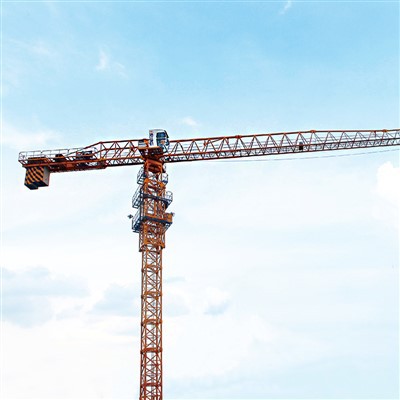
Let me break this down straight, no jargon, no fancy fluff. First, let’s get clear on what a remote-operated power tower crane is, versus what people used to think “remote control” meant for big construction gear. Back in the day, remote control for cranes usually meant a handheld fob a ground worker held—like what you use to unlock a car, but bigger. That worked for small, mobile cranes, but power tower cranes are totally different: they’re fixed to the ground (or a foundation) for months, even years, their booms can stretch 200+ feet, and they lift loads of tons at a time. Handheld fobs only let you do one small task, not full erection or moving heavy materials across a site.
Modern remote operation for power tower erection cranes isn’t a single fob. It’s a setup that connects the crane’s control system to a controller—either a touchscreen station on the ground, hundreds of feet away, or even a laptop/tablet in an office if the site’s big enough. The tech relies on two key things first: sensors on the crane itself, and low-latency data links. Every power tower crane we supply these days can be retrofitted with that hardware, or it’s built in if you order a new unit. We tested one of our models last year at a wind farm site out west, where the cab was 350 feet up—no way a human could work up there in 100-degree heat with wind gusts hitting 40 mph, which made the cab shake so bad operators could barely see. Remote operation cut that headache entirely.
But wait—there’s a catch, and it’s a big one: visibility. Even the best camera setup on a crane can’t match a human’s eyes. Let’s be real: a cab operator has that 360-degree view, can spot a worker running across the site, or a loose cable hanging by the boom, or how a load is swinging in the wind. Remote operators rely on cameras, which have blind spots, especially at night or when it’s foggy. That’s why most sites don’t do full remote operation 100% of the time, especially for erection work, which is the riskiest part of using a power tower crane. Erection is when you’re putting the crane itself together—bolting sections, hoisting the boom, setting the counterweight. For that part, almost every contractor I work with still uses a cab operator, because a mistake here is catastrophic. But once the crane’s fully up and running, for routine tasks—lifting steel beams, moving precast concrete, hauling tools up to workers on upper floors—remote operation works great, as long as you set up the right checks.
Another thing we’ve seen: remote operation isn’t just about ditching the cab. It’s about solving labor problems, which are huge in construction right now. A lot of crane operators are nearing retirement, and fewer young people want to spend 8 hours a day in a tiny cab 300 feet up. Remote roles are easier to fill, and they’re more flexible—you can have one operator running two cranes on different sites in the same region, instead of needing a whole team of cab operators. That’s a game-changer for mid-sized contractors I work with, who don’t have the budget to hire a full-time operator for every job.
But it’s not all smooth sailing. We had a client last year who tried full remote operation on a downtown high-rise, and it went sideways when a cell tower 2 miles away went down. The data link cut out for 12 seconds, and the crane’s load swung a little—no damage, but they stopped using full remote after that. So you need a redundant data system: both cellular and a dedicated radio link, just in case one fails. We don’t sell a crane without that redundant setup anymore, because it’s a non-negotiable for reliability.
Also, there’s training. A remote operator isn’t just someone who knows how to use a tablet. They need to understand how the crane behaves—how a heavy load moves in wind, how the boom’s length affects lifting capacity, the same things a cab operator learns. We offer half-day training sessions for both new and existing operators, and we make sure the training covers remote-specific stuff, like how to read camera feeds together, how to adjust controls when latency kicks in. Last year, 9 out of 10 of our clients who tried remote operation passed their training on the first try, which is way better than I expected when we first started offering the retrofit kits.
Wait, let’s clear up a common myth: remote operation doesn’t mean no human on site at all. For routine tasks, you might have a ground worker as a spotter, to keep an eye on things the camera misses, and the remote operator is in a nearby trailer or their office. For erection, you still have a cab operator on site, and a remote backup if something goes wrong. It’s a hybrid model that most contractors are using right now, not full remote replacing the cab entirely.
So should you switch to remote operation for your power tower crane? It depends on your site, really. If you’re working in a remote location, like a wind farm or a rural construction site where access is limited, remote operation is perfect—no need to move people to and from a high cab every day. If you’re in a busy downtown area, where there’s a lot of foot traffic around the crane, remote operation lets you adjust movements more precisely without worrying about someone being in the cab missing a detail. And if you’re struggling to find qualified crane operators, remote roles are a big draw for potential hires.
I’ll be honest, when we first started testing remote operation 5 years ago, we thought it was a gimmick. Now, it’s one of the most requested add-ons for the power tower cranes we supply. The biggest win we’ve seen is safety: our clients reported a 30% drop in near-misses when using remote operation, because ground workers and operators have better communication, and the strain on cab operators (who are more likely to make mistakes when they’re tired) is gone.

If you’re thinking about looking into remote operation for your power tower erection crane, don’t overcomplicate it. First, reach out to us—we’ll walk you through the retrofit options, the training, and the setup that works for your site. We can even set up a demo of our remote system at your next job, so you can see how it works in person, not just read about it. At the end of the day, the goal isn’t to replace the people who make construction work—it’s to make their jobs easier, safer, and more flexible.
Topkit Tower Crane References
- International Association of Crane and Heavy Equipment Manufacturers. (2022). Remote Operation of Construction Cranes: Safety Guidelines and Industry Insights.
- Construction Safety Association of North America. (2023). Labor Shortages and Remote Work Solutions in Heavy Construction.
- Crane Tech Journal. (2021). Retrofit Technologies for Power Tower Cranes: Redundancy and Reliability in Remote Operation.
- Occupational Safety and Health Administration. (2022). Best Practices for Crane Operation Visibility and Remote Work.
- Power Equipment Supply Association. (2023). Market Trends in Remote-Operated Construction Cranes: Adoption Rates and User Feedback.
Zhejiang Construction Engineering Machinery Co., Ltd.
Zhejiang Construction Engineering Machinery Co., Ltd. is well-known as one of the leading power tower erection crane manufacturers and suppliers in China. If you’re going to buy high quality power tower erection crane made in China, welcome to get more information from our factory.
Address: A/F, Lianjin Building, 175 Zhaohui Road, Hangzhou, Zhejiang, China
E-mail: zjcmsale2@zjjj.com.cn
WebSite: https://www.zjcmcranes.com/
