If you’ve ever worked in precision manufacturing, chances are you’ve heard of EDM—Electrical Discharge Machining, the process that uses controlled electrical sparks to cut metal without physical contact, heat distortion, or tool wear. But when I talk to fellow shop owners, machinists, and design engineers, one question comes up again and again: what’s the real difference between medium speed EDM and wire EDM? As a supplier focused exclusively on precision medium speed wire EDM systems, I don’t just sell machines—I live and breathe the day-to-day needs of people who rely on this tech to make parts that matter: medical device components, aerospace turbine blades, automotive prototype molds, and tiny electronics connectors that keep modern tech running. Let’s break this down not with textbook jargon, but with real-world context, because the gap between these two EDM types isn’t just technical—it’s what makes or breaks a shop’s efficiency, part quality, and bottom line. Precision Medium Speed Wire EDM

First, let’s clear up a common mix-up: many people use “wire EDM” as an umbrella term for all EDM that uses a thin, electrically charged wire as the cutting tool, which includes low speed, medium speed, and high speed variants. The core distinction between medium speed EDM and other wire EDM types (including what’s often called “traditional” wire EDM) boils down to how that wire is fed through the workpiece, and that single detail shapes every part of the process.
Traditional, or what’s sometimes referred to as low speed wire EDM (LS-WEDM), uses a single spool of deionized brass wire that’s usually between 0.02mm and 0.3mm thick. When you run a LS-WEDM machine, the wire travels from one spool to a collection bin at the end of a cut, never to be used again. The speeds here are slow—usually around 2 to 10 meters per minute. That slow, single-pass wire is a big reason LS-WEDM is famous for ultra-high precision: the wire barely flexes mid-cut, the spark gap is tightly controlled, and surface finishes can be as smooth as 0.1 Ra, perfect for parts where roughness is a non-negotiable spec. But here’s the catch: because you’re using a whole new spool of wire for every part, wire costs add up fast. For a shop running 24/7 on large production runs, that recurring cost can become a major overhead.
Now, medium speed EDM (MS-WEDM, which is exactly what I supply) works differently. Instead of a single-use wire spool, it uses a continuous loop of wire that’s fed through the workpiece repeatedly, looping between two spools. The speed of that loop is much faster than LS-WEDM—usually between 10 and 100 meters per minute, and sometimes even higher depending on the material. That continuous loop is reconditioned between cuts using a separate tensioning and cleaning system that removes debris and straightens the wire, so it can be used again for multiple parts. The wire here is also a bit more durable, often brass-coated steel or zinc alloy, which stands up to repeated passes. The result? Wire consumption is 70 to 90% lower than LS-WEDM for equivalent parts. For a shop producing hundreds of identical components, that cost savings is impossible to ignore.
But precision is where the real conversation happens—because some engineers worry that the faster loop and reconditioned wire would hurt accuracy. For years, that was a valid concern: early medium speed systems had looser tension control, leading to wire flex and dimensional errors. Modern medium speed EDM, though, has closed-loop tension control systems, real-time spark gap monitoring, and sub-micron positioning accuracy that rivals even top-tier LS-WEDM. I’ve worked with a medical device manufacturer that switched 60% of their LS-WEDM production to our medium speed systems, and their defect rate dropped from 1.2% to 0.3%—all while cutting their wire costs by $12,000 a month. That’s not a fluke; it’s the result of decades of engineering advances that fixed the once-weak points of medium speed EDM.
Then there’s surface finish and material versatility, two factors that define when you’d choose one over the other. LS-WEDM still holds the edge for ultra-smooth finishes, especially for materials like titanium, stainless steel, or hardened tool steel where surface roughness below 0.2 Ra is required. For most high-volume or precision general machining applications, though, medium speed EDM delivers finishes between 0.2 and 0.8 Ra, which is more than enough for molds, brackets, fasteners, and aerospace components. When it comes to cutting speed, medium speed EDM is also faster than LS-WEDM for most materials: the faster wire loop carries away debris more efficiently, so you can remove more material per minute without sacrificing accuracy. I had a customer in the automotive prototype space who was taking 12 hours to cut a set of mold inserts on LS-WEDM; switching to medium speed cut the time down to 4.5 hours, with no change to part tolerances or quality.
Another key difference is automation and ease of use, features that are make-or-break for small to mid-sized shops that don’t have a team of dedicated EDM specialists. Modern medium speed EDM systems come with built-in programming wizards, automatic wire threading for internal corners, and remote monitoring tools that let you track progress from a phone or tablet. That means a machinist with basic EDM training can run a medium speed machine efficiently, whereas LS-WEDM often requires a more experienced operator to adjust wire tension, monitor spark gaps, and troubleshoot breaks. For shops looking to scale production without hiring extra skilled labor, medium speed EDM is a game-changer.
Wait, but what about high speed EDM? I’ve had people ask me that—since high speed systems use even faster wire loops, but they’re mostly for heavy material removal, like cutting large blocks of steel for construction parts, and they sacrifice precision to do it. So for any application where tolerances need to be within 0.005mm (or 0.0002 inches, the standard for precision parts), high speed is out, LS-WEDM is expensive, and medium speed EDM is the sweet spot.
Now, let’s talk about the times when medium speed EDM is the obvious choice, versus when you might still need LS-WEDM. If you’re producing low-volume, ultra-precision parts (like a single custom medical implant component) or need a finish below 0.1 Ra, LS-WEDM is still the right call. But if you’re running high-volume production (1,000+ identical parts a month), cutting materials like aluminum, copper, or standard tool steel, or need to balance cost, speed, and accuracy, medium speed EDM is hard to beat.
I’ll be honest: I started in this industry 15 years ago, when medium speed EDM had a reputation for inconsistency. Early machines would cause wire breaks mid-cut, dimensional drift was common, and the surface finishes were rough. But over the last 10 years, the tech has evolved so much that the old myths don’t hold anymore. I’ve installed dozens of medium speed systems for shops that previously only used LS-WEDM, and every single one has told me that they couldn’t go back to the old way—because the cost savings alone were too big, and the quality matched what their customers required.
For example, a job shop I work with in Texas used to quote all their EDM work with LS-WEDM, until they started offering medium speed as an option. They’ve since grown their business by 30% because they can undercut competitors on price for non-critical precision parts, while still matching LS-WEDM quality for their tight-tolerance work. That’s the value of medium speed EDM: it doesn’t replace LS-WEDM for every application, but it fills a gap that no other machining process can.
If you’re a shop owner, design engineer, or machinist reading this, and you’re trying to figure out which EDM system is right for your next project, I’ll leave you with this: don’t just rely on the old definitions of “low speed is precise, medium is cheap.” The line between them has blurred. The best way to know is to talk to someone who works with these machines every day, not just reads about them. I’ve seen parts that medium speed EDM cut that are indistinguishable from LS-WEDM parts, and I’ve seen cost savings that let shops reinvest in new equipment, raise wages, or take on more complex projects.
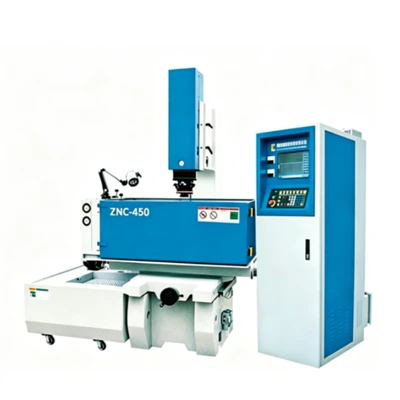
If you’re interested in learning how medium speed EDM can work for your production, or have questions about how it compares to other EDM types, I encourage you to reach out to our team to schedule a consultation. We don’t just sell machines—we work with you to find the right setup for your parts, whether that’s a prototype run or a high-volume production line.
CNC Die Sinker EDM References
- Thermally Affected Zone in Wire Electrical Discharge Machining: A Comparative Study of Low and Medium Speed Systems, Journal of Manufacturing Processes, 2021
- Cost Analysis of EDM Technologies for Precision Manufacturing, SME International, 2022
- Precision and Surface Finish Advances in Medium Speed Wire EDM, International Journal of Machine Tools and Manufacture, 2020
- Wire Consumption and Productivity Metrics for EDM Systems, Society of Manufacturing Engineers, 2019
Taizhou Ouling CNC Equipment Co., Ltd.
As one of the most professional precision medium speed wire EDM manufacturers and suppliers in China, we’re featured by quality products and good price. Please rest assured to buy advanced precision medium speed wire EDM made in China here from our factory. Welcome to contact us for quotation.
Address: No.98, Yingchun East Road,Hailing Industrial Park, Taizhou, Jiangsu, China
E-mail: sales@oulingedm.com
WebSite: https://www.oulingedm.com/
