If you’ve been around plastic injection molding for even a hot minute, you know two-piece molds—they’re the bread and butter of making everything from cheap kitchen spatulas to sleek auto parts. Last year alone, I talked to three big client accounts who said their old two-piece molds were holding them back on speed and part consistency, so I’ve spent way too much time (in the factory, at trade shows, and on late-night Zoom calls with mold techs) geeking out over what’s actually new in the space lately. Forget the “this is how we’ve always done it” nonsense—these trends aren’t just buzzwords that’ll fizzle out by next quarter; they’re actually changing how suppliers like me run our shops and what our clients get in the end. Two Piece Mold
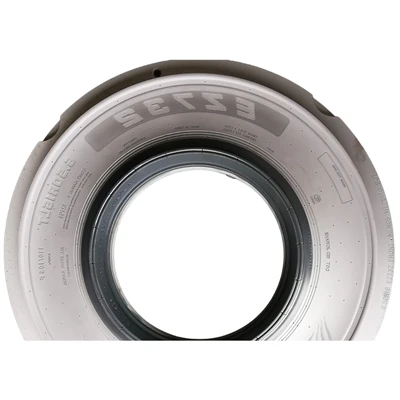
First up, and maybe the biggest game-changer I’ve seen in the last 18 months, is modular insert customization that’s not just for small batches. For years, if you needed a two-piece mold with a custom cavity shape, you either paid a fortune for a one-off mold or stuck to cookie-cutter inserts that didn’t fit your part. Now, techs are using 5-axis CNC machining paired with modular steel inserts that slot together like a super precise Lego set. The kicker? You don’t have to scrap the whole mold if you tweak your part design—just swap out one or two inserts, and you’re good to go. Last month, a client who makes medical device caps came to us because their old mold couldn’t handle a tiny wall-thickness change (from 0.8mm to 0.6mm) without cracking parts. We swapped two inserts in their existing two-piece mold in 48 hours, and they saved $12k vs. ordering a whole new mold. No joke, that’s the kind of win that keeps me up at night (in a good way). Also, these inserts are coated with that new diamond-like carbon (DLC) stuff that cuts down on wear so much, we’re seeing mold lifespans jump 25-30%—way better than the old chrome plating we used to use.
Next, real-time mold monitoring that actually works (not just a fancy screen with numbers that don’t mean anything). I don’t care what the “industry experts” say—most mold sensors before this were garbage: they’d give a temperature reading 10 seconds too late or flag a random pressure blip that didn’t matter. Now, we’re using these tiny, industrial-grade sensors that fit right into the two-piece mold’s core and cavity plates, not just mounted on the outside where they’re useless. The sensors track melt temperature, injection pressure, cooling rate, and even how much the mold is flexing during each cycle. We pair that with basic AI (nothing too complicated—no PhD required) that flags actual issues before they ruin parts. For example, last week a client ran a batch of 10k food storage lids, and the sensor picked up a slight cooling unevenness that we wouldn’t have caught until 2k parts in. We adjusted the cycle on the fly, saved them 2k ruined parts, and they didn’t have to shut down their production line. The best part? This isn’t just for big automotive or medical companies. We’re now offering this monitoring setup for small to mid-sized two-piece molds too, for an extra $1,200—way cheaper than I thought it’d be when I first looked into it.
Then there’s the whole thing with sustainable materials and compatible mold tweaks. Everyone’s been talking about moving to recycled plastics for years, but the problem is that most two-piece molds weren’t built for recycled resin—it’s more abrasive, and it melts at a slightly different temp, so old molds wear out way faster. Now, we’re seeing two-piece molds designed specifically for recycled or bio-based plastics. We’re using high-grade tool steel that’s more resistant to abrasive fillers (like post-consumer PET) and adjusting the injection gates and cooling channels to match the viscosity of these new materials. A client who makes packaging for skincare products switched to 100% recycled HDPE six months ago, and before we updated their two-piece mold, their mold was wearing out every 150k cycles. Now it’s at 220k cycles, and they’re wasting 40% less resin because the mold’s cooling is more even, so there’s less scrap. Also, some clients are asking for two-piece molds that let them overmold soft materials (like TPE) onto rigid parts without a whole third mold—wait, no, that’s not overmolding, it’s a two-piece mold with a sliding core that lets you do secondary features in the same cycle. That’s been a huge ask for electronics parts, because it cuts down on assembly time.
Wait, I can’t skip digital twin tech, even though I was skeptical at first. A lot of mold guys think digital twins are just a marketing gimmick, but when you use them correctly, they save so much time during the prototype stage. A digital twin is basically a virtual copy of your two-piece mold—you plug in the material type, part design, machine specs, and it simulates how the mold will perform before you even cut steel. We used to spend 2-3 weeks tweaking a new mold’s cooling channels just to fix warpage issues. Now, with a digital twin, we run 10 different simulations in 2 days, pick the best one, and get it right on the first try. Last quarter, a client’s prototype for a power tool handle took us 7 days instead of the usual 14, and we only had one prototype part that needed a tiny tweak—no more scrapping $500 worth of steel because we guessed wrong. The trick is, you don’t need a fancy team of data scientists to use this; we run the simulations in-house, so the client doesn’t have to pay extra for it.
Oh, and don’t sleep on quick-change mold components. If you run multiple part jobs, switching out a two-piece mold’s core and cavity plates used to take 4-6 hours, which kills production time. Now, we’re equipping our molds with quick-lock systems that let you swap the mold’s interchangeable plates in under 45 minutes. That’s the kind of efficiency that makes small manufacturers look like big players. A client who makes custom lawn garden parts runs 8-10 different jobs a week; before, each switch took 5 hours, now it’s 1 hour total. They added 2 extra production runs a week, which translated to $180k in extra revenue last quarter. That’s not a small win.
Now, I know some of you reading this are probably thinking, “Yeah, that’s all fine for big clients, but what about me with a small shop making random parts?” The good news is, most of these trends are scaled down now. We don’t just do fancy modular inserts for $100k automotive molds—we offer them for small two-piece molds too, starting at $8k vs. the old $15k for a standard mold. The real-time monitoring system we offer? We have a compact version for molds under $10k that’s simple to set up, no complicated software training. I used to turn down small jobs because updating a mold would cost too much, but now these trends make it worth it for every client.
The biggest takeaway here is that two-piece molds aren’t stagnant anymore. They’re not just blocks of steel that you inject plastic into—they’re becoming adaptable, smart, and even sustainable. But here’s the thing: a lot of these “new” technologies only work if you’re working with a supplier who actually knows how to implement them, not just sells you a fancy mold and walks away. We’ve been testing all these trends in our shop for over a year, working out the kinks, so we don’t pass on those costs (or headaches) to our clients.
If you’re tired of mold scrap that eats into your profits, long setup times, or molds that wear out way too fast, I get it. You don’t have to overcomplicate it—just reach out, tell me what you’re making, what material you’re using, and what your cycle time is right now. We’ll run a free assessment of your current mold, show you how these new two-piece mold trends can help, no pressure, no sales pitch nonsense. I’ve been doing this for 12 years, and my whole business is built on making my clients’ jobs easier, not just selling them steel. So if you’re ready to stop fighting with your molds and start hitting your production goals, hit us up anytime. Let’s make something that works better, faster, and saves you cash.
Special Structure Mold References:
- Society of Plastics Engineers (SPE), “2024 Trends in Injection Molding Tooling”, SPE Annual Technical Conference, 2024.
- MoldMaking Technology, “Modular Mold Inserts Drive Cost Savings for High-Variety Production”, March 2024.
- Plastics News, “Sustainable Injection Molding Molds: Adapting for Recycled and Bio-Based Resins”, June 2024.
- Manufacturing Engineering, “Real-Time Mold Monitoring Cuts Scap and Downtime for Small and Mid-Sized Manufacturers”, August 2024.
Anhui Varon Mould Co., Ltd.
We are one of the most professional two piece mold manufacturers and suppliers in China, also support customized service. We warmly welcome you to wholesale premium two piece mold made in China here from our factory. If you have any enquiry about cooperation, please feel free to email us.
Address: Anhui Province, Ningguo City, Economic and Technological Development Zone, Heli Industrial Park, Dongcheng Avenue
E-mail: admin@varonmould.com.cn
WebSite: https://www.wanlongmold.com/
