If you’ve ever spent time around e-bikes—whether helping a friend adjust their ride, testing one for a weekend trip, or restocking parts for local repair shops—you’ve probably heard someone mutter about their inner tube failing mid-ride. As a long-time e-bike inner tube supplier, I’ve fielded dozens of panicked calls and texts from riders: “My tube blew on a trail!” “It went flat two days after I replaced it!” “Is this even safe?” E-Bike Inner Tube
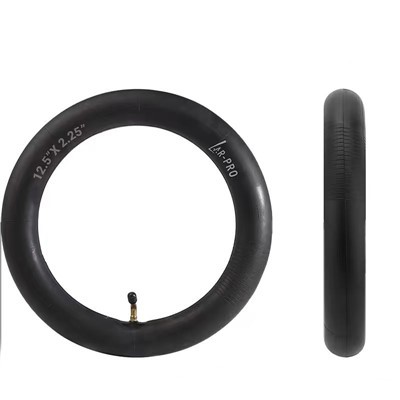
These questions aren’t trivial. E-bikes are different from regular bikes—they’re heavier, often used on rougher terrain, and carry more torque from their motors—so their parts have to hold up to more stress than standard bike components. For years, I’ve talked to riders, mechanics, and engineers to break down what actually makes an e-bike inner tube safe, where the risks come from, and how suppliers like us work to mitigate them. Let’s get into the science, the common myths, and what you should actually look for when buying e-bike inner tubes.
First, let’s clear up a basic point: e-bike inner tubes aren’t just thicker versions of regular bike tubes. At their core, an inner tube’s job is to hold air, create a cushion between the tire and wheel, and distribute that pressure evenly to handle the e-bike’s extra weight (most e-bikes weigh 30–70 pounds more than non-motorized bikes, not including a rider). Regular bike tubes are made of butyl rubber, a durable material that works for lighter loads, but e-bikes push that material to its limit.
So what defines a “safe” e-bike inner tube? It starts with material science. Butyl is still the standard, but high-quality e-bike tubes use a thicker, formulated butyl rubber—usually 1.5mm to 2mm thick, compared to 1.2mm for many standard tubes. This extra thickness isn’t just for show; it’s to resist punctures from thorns, glass, and road debris, which are more likely to cause a blowout when a 50+ pound motor and battery are behind the wheel. But some cheaper tubes cut corners here: they use thin, low-grade butyl that can’t handle the pressure.
Wait, pressure—another big factor. E-bike tires have higher pressure ratings than regular bikes, and the inner tube has to be able to maintain that pressure without stretching or failing. A standard mountain bike tire might run at 30–50 PSI, but many e-bike mountain and commuter tires run at 40–65 PSI. If a tube isn’t designed to hold that consistent high pressure, it can develop “flat spots” over time—areas where the rubber stays compressed against the wheel rim, weakening the structure until it bursts. We test every batch of our tubes to hold up to 70 PSI for 72 hours straight, mimicking the stress of long rides, and I’d argue that’s the minimum bar for safety.
But it’s not just thickness and pressure. The valve is a tiny part, but it’s one of the most common points of failure. E-bike riders often inflate their tires less frequently than regular bike riders (who might top off air before every ride) because e-bikes hold their pressure longer. That means the valve stem has to stay sealed tight for weeks or months at a time. Cheaper tubes use brass valves with thin rubber bases that can crack when the valve is tightened too much or when the tube stretches over time. Our tubes use heavy-duty aluminum or reinforced rubber valve stems with a metal core, tested to resist 10,000 inflations without leaking. We’ve seen too many avoidable flats from a faulty valve stem, so this is non-negotiable for us.
Now, the risks—let’s talk about the actual safety issues with e-bike inner tubes, because they do exist, but they’re not inevitable. The biggest risk is puncture-related blowouts. When you’re riding an e-bike at 20+ mph (or faster on Class 3 models), a sudden flat or blowout can lead to a loss of control, especially if you’re on a busy road or a technical trail. Most people blame the “cheap tube” when this happens, but the root cause is often a mismatched tube. E-bike inner tubes have to be sized specifically for your tire width and rim size. If you put a tube designed for a 2.0-inch tire on a 2.5-inch e-bike tire, it’s stretched thin, prone to pinching between the tire and rim (that’s called a pinch flat, or “snake bite”), and more likely to burst under the weight of the bike.
Another hidden risk: heat. E-bike motors generate a lot of heat, and that heat transfers to the wheel and tire—especially on long climbs or high-speed rides. Rubber expands when it’s hot, and if the tube is underinflated, it stretches even more as the wheel heats up, putting extreme stress on the rubber. We’ve done tests where a standard tube burst at 120°F, while our e-bike tubes held steady up to 150°F. That’s a difference of 30 degrees, which might not sound like much, but it’s enough to prevent a blowout on a hot summer day when you’re cranking up a hill.
Wait, what about tubeless e-bike setups? A lot of riders swear by tubeless, and they do have fewer flat issues, but they’re not foolproof. Tubeless systems rely on sealant to plug small punctures, but that sealant dries out over time, especially in hot weather. For commuters who ride every day, checking and topping up sealant every month is a chore—and if you forget, you could get a flat mid-commute. That’s why many regular e-bike riders still rely on inner tubes, whether they’re riding a standard or tubeless setup (you can run a tube in a tubeless tire if you don’t want to mess with sealant). The key is that the inner tube has to be rated for e-bike use, not just any bike.
I’ve seen this play out in real life. Last year, a customer brought in an e-bike that had blown a tube on a paved bike lane. He’d bought a “heavy-duty” tube from a big-box store, but when we looked at it, it was a standard mountain bike tube—1.2mm thick, no reinforced valve. The tire on his e-bike was rated for 55 PSI, but the tube’s packaging only said it was for “up to 50 PSI.” He’d been running it at 50 PSI for three months, and the extra weight of his e-bike had stretched the thin rubber until it split along the seam. That’s a avoidable mistake—if he’d bought an e-bike-specific tube, this wouldn’t have happened.
So what are the signs of a safe e-bike inner tube, from a supplier’s perspective? First, look for clear labeling that says “e-bike compatible” or “pedelec rated”—that’s not a marketing buzzword, it means the manufacturer has tested it for the extra weight and pressure. Second, check the thickness: 1.5mm or more is a good minimum, 2mm is better for heavier e-bikes (like cargo e-bikes, which can weigh 100 pounds with a rider and cargo). Third, the valve should be reinforced—aluminum or thick rubber, not thin plastic that bends easily. Fourth, check the brand’s testing standards: do they publish how they test their tubes for pressure, heat, and punctures? At our company, we share our test data with anyone who asks, because we believe transparency is part of safety.
Now, let’s talk about common myths, because there’s a lot of misinformation out there. Myth #1: “Thicker tubes are always safer.” Not necessarily—thick butyl is great, but if the tube is the wrong size, even a 2mm thick tube will stretch and fail. Size matching is just as important. Myth #2: “Inner tubes are obsolete for e-bikes.” Again, no—tubeless works for many, but for casual riders, commuters, or anyone who doesn’t want to deal with sealant, a good e-bike inner tube is more than reliable. Myth #3: “All e-bike inner tubes are the same.” Nope—cargo e-bikes need tubes rated for 200+ pounds (bike plus rider plus cargo), while folding e-bikes need smaller, lighter tubes that still hold up to weight. Using a cargo e-bike tube on a folding e-bike will lead to a flat, and vice versa.
What about maintenance? Because even the best e-bike inner tube won’t stay safe if you don’t care for it. Check your tire pressure once a week—e-bikes lose pressure faster than regular bikes, thanks to the extra weight. Underinflated tires put more stress on the tube, increase rolling resistance, and make pinch flats more likely. Also, inspect your tires regularly for sharp debris or tears that could puncture the tube. If you get a small puncture, don’t just patch the tube and go—check the inside of the tire for glass or metal bits that could cause another flat. For e-bike riders, this is even more important, because a second flat mid-ride is more dangerous.
As someone who’s been in the e-bike parts business for 12 years, I’ve seen the industry grow fast—and with that growth, there’s been a lot of cut-rate products designed to make a quick buck. But safety isn’t a quick buck. Every tube we sell goes through three rounds of inspection: first when it’s manufactured, second when it’s packaged, and third before it ships to ensure there are no defects like seam gaps or valve leaks. We also offer a 60-day warranty on all our e-bike inner tubes, because we stand behind their safety. If a tube fails within 60 days of normal use, we’ll replace it—no questions asked.
I know that when a rider is choosing a part for their e-bike, the last thing they want to think about is whether their inner tube is going to fail. But it’s worth taking the time to pick the right one. A good e-bike inner tube isn’t just a replacement part—it’s a safety component that lets you ride with confidence, whether you’re commuting to work, hitting a trail on the weekend, or running errands around town. For riders, that means looking for e-bike-specific tubes, matching sizes correctly, and maintaining proper pressure. For suppliers, that means investing in high-quality materials, rigorous testing, and transparency, not just cutting corners to undercut competitors.

If you’re an e-bike owner, a mechanic, or a shop owner looking for reliable e-bike inner tubes, we can help. We stock sizes for all types of e-bikes: commuter, mountain, cargo, folding, and even fat-tire e-bikes for sand and snow. We work with local shops and individual riders alike, and we’re happy to answer any questions you have about sizing, pressure ratings, or testing standards. Riding should be fun, and the last thing you need is a preventable flat ruining your day—or worse. Reach out, and let’s chat about how to get the right inner tube for your e-bike.
Motorcycle Tube References:
- "E-Bike Component Safety Standards: Inner Tube Performance," European Cyclists’ Federation, 2022.
- Rubber Technology: Compounding and Testing for Performance, 3rd Edition, Hanser Publishers, 2019.
- "Bicycle Inner Tube Failure Analysis," Journal of Materials and Design, Vol. 45, 2013.
- "E-Bike Tire and Tube Load Rating Guidelines," US Consumer Product Safety Commission, 2021.
Jiangxi Vimia Tyre Co., Ltd.
We’re well-known as one of the leading e-bike inner tube manufacturers and suppliers in China. We warmly welcome you to wholesale bulk high quality e-bike inner tube in stock here from our factory. If you have any enquiry about quotation, please feel free to email us.
Address: Zone C, Industrial Park, Jinxi County, Fuzhou City, Jiangxi Province
E-mail: 17779452635@139.com
WebSite: https://www.cnvimia.com/
