If you’ve ever stood near an industrial site during a power outage, you’ve probably heard the low, steady hum of a diesel generator. For as long as I’ve been selling industrial diesel generator sets—nearly 18 years now—I’ve fielded the same question over and over: “Do these things really produce that much emissions?” It’s a fair question, especially as more businesses and communities shift toward cleaner energy sources and stricter environmental rules. The short answer is, it depends. But to get the real story, we have to dive into what emissions generators actually produce, how modern technology has changed those numbers, and why choosing the right generator for your specific needs matters more than ever. Industrial Diesel Generator Set
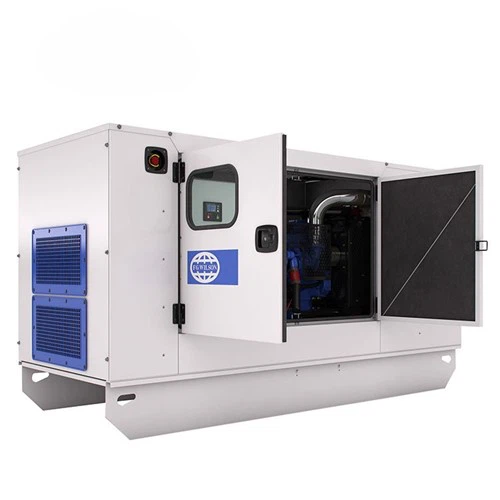
Let’s start with the basics. When diesel fuel is burned, it releases a mix of pollutants that fall into two main categories: criteria pollutants and greenhouse gases. Criteria pollutants are the ones regulators track closely because they have direct, measurable impacts on human health and the environment. They include particulate matter (PM), nitrogen oxides (NOₓ), carbon monoxide (CO), hydrocarbons (HC), and sulfur dioxide (SO₂). Greenhouse gases (GHGs) like carbon dioxide (CO₂) and methane (CH₄) trap heat in the atmosphere, contributing to climate change.
Years ago, before strict emissions standards, industrial generators were far more polluting. Back in the 1990s and early 2000s, many generators didn’t have any emissions controls built in. A typical older 500 kW generator might have emitted around 10 grams of NOₓ per kilowatt-hour (g/kWh) and 0.3 g/kWh of PM. That’s the kind of number that would raise red flags for environmental agencies today. But here’s the thing: the industry didn’t stop there. In the last two decades, emissions standards from groups like the U.S. Environmental Protection Agency (EPA) and the European Union’s Non-Road Mobile Machinery (NRMM) directive have forced manufacturers to completely redesign how diesel generators work.
Modern industrial generators now come equipped with a range of emissions control technologies that cut those numbers drastically. Selective Catalytic Reduction (SCR) systems, for example, inject a urea-based solution (called Diesel Exhaust Fluid, or DEF) into the exhaust stream. This converts NOₓ into harmless nitrogen and water vapor. Diesel Particulate Filters (DPFs) trap almost all of the tiny soot particles that would otherwise escape through the exhaust—some DPFs remove over 90% of PM. Combined with advanced engine design, like high-pressure fuel injection and turbocharging, today’s generators can emit as little as 0.02 g/kWh of NOₓ and 0.001 g/kWh of PM. That’s a 99% reduction from older models. It’s a huge shift, and it’s changed how businesses think about generator emissions.
But that’s not the whole picture. Where and how a generator is used also has a huge impact on its actual emissions footprint. Let’s say you own a manufacturing plant that relies on a generator as a backup power source—something that only runs for a few hours a month, during outages. Even if that generator meets the latest ultra-low emissions standards, its total annual emissions will be far lower than a generator that runs 24/7 as a primary power source for a remote mine or construction site. For example, a 1 MW primary generator running 8,760 hours a year will emit 2-3 tons of CO₂ annually, compared to a 1 MW backup generator running just 100 hours a year, which emits less than 0.05 tons of CO₂. That’s a massive difference.
Then there’s the issue of fuel quality. Generators run on diesel, but not all diesel is the same. Low-sulfur diesel (which has less than 15 parts per million of sulfur) is required for modern emissions control systems, and it cuts SO₂ emissions by over 95% compared to high-sulfur diesel. If someone uses low-quality, high-sulfur fuel in a generator that’s supposed to run on low-sulfur fuel, they’re not only damaging the engine but also producing way more harmful pollutants. I’ve seen this happen a handful of times early in my career—a small construction company bought a cheap, older generator, used regular off-road diesel, and ended up with exhaust that was thick enough to see from a mile away. They had to replace parts and upgrade their fuel to meet local air quality rules, which cost them far more than investing in a cleaner, newer model would have in the first place.
Another common misconception is that all generators are equally bad for the climate when it comes to greenhouse gases. While diesel does emit CO₂, the amount varies depending on efficiency. A modern industrial generator is about 40% efficient at turning diesel fuel into electricity—meaning 40% of the energy in the fuel becomes power for your facility, and the rest is lost as heat. Older generators are only 25-30% efficient, so they burn 30-50% more fuel to produce the same amount of power, releasing more CO₂ in the process. That’s why upgrading an outdated generator to a newer, more efficient model isn’t just about reducing criteria pollutants—it’s also cutting your carbon footprint.
Of course, no discussion of generator emissions would be complete without addressing the debate around cleaner alternatives, like solar, wind, or battery storage. A lot of customers ask me, “Why would I use a diesel generator when solar is renewable?” The answer is reliability. Solar and wind are great for reducing your reliance on grid power, but they don’t work when the sun isn’t shining or the wind isn’t blowing. Batteries can store energy, but for long-duration outages (like a multi-day storm) or remote locations where there’s no grid access, diesel generators are still the most cost-effective, reliable option. And with modern emissions controls, they’re far cleaner than they used to be. It’s a trade-off, not a choice between “good” and “bad”—it’s about what works for your specific needs.
That said, I always advise customers to think beyond just the upfront cost of a generator. When you’re buying an industrial diesel generator set, you’re not just buying a piece of equipment—you’re buying an asset that will impact your facility’s emissions for years. Here’s what I recommend you prioritize when making a decision:
First, know your usage. Is this a backup generator, running a few hours a month? Or is it primary power for a remote site, running thousands of hours a year? Backup generators can often use slightly lower-emission, cost-effective models designed for infrequent use, while primary generators need the most advanced emissions controls to meet regulatory requirements and reduce long-term operating costs.
Second, check local emissions rules. Different regions have different standards. If your business is in a city with strict air quality regulations, you’ll need a generator that meets EPA Tier 4 Final (in the U.S.) or EU Stage V standards—these are the strictest in the world, and they require the SCR and DPF systems I mentioned earlier. Using a generator that doesn’t meet these standards can result in fines, and in some areas, you won’t even be allowed to operate it.
Third, factor in operating and maintenance costs. A cleaner generator might cost a bit more upfront, but it will save you money on fuel and repairs over time. DPF systems, for example, require occasional cleaning (called regeneration) to prevent soot buildup, and modern engines are designed to run efficiently on low-sulfur diesel. Older, dirtier generators often require more frequent parts replacements and higher fuel consumption, which adds up over the life of the machine.
I’ve seen too many customers make the mistake of buying the cheapest generator they can find, only to regret it when they get hit with fines for emissions violations or have to shut down operations because the generator isn’t reliable. About five years ago, a food processing plant in the Midwest came to me after they had to pay a $12,000 fine for an older generator that was emitting too much PM during a grid outage. They’d bought the generator from a fly-by-night seller, and it didn’t have any emissions controls. Replacing it with a Tier 4 compliant generator cost them $40,000, but they saved $15,000 a year in fuel and no more fines. It was a no-brainer, but they didn’t know to ask about emissions when they bought the first one.
The good news is that the industry has come a long way in reducing generator emissions. When I started in this business, most generators were loud, smoky, and required a lot of maintenance. Now, modern industrial diesel generators are quieter, cleaner, and more efficient than ever. That doesn’t mean they’re zero-emission—no combustion engine is. But they’re a far cry from the generators of the past, and for many businesses, they’re still the best option for reliable power.
At the end of the day, the question “Do diesel generators produce a lot of emissions?” has a simple answer: it depends on the generator, the fuel it uses, and how it’s operated. If you have an old, unregulated generator running on high-sulfur diesel, yes—it will produce a lot of emissions. If you have a modern, compliant generator used as a backup power source, its emissions are minimal, especially when compared to the impact of having your business shut down during an outage.
I’ve spent 18 years in this business, and I can tell you that the best investment you can make when buying an industrial diesel generator set is to work with someone who understands not just the equipment, but also your specific needs and local regulations. That’s why I’m here: to help you cut through the noise, understand what emissions standards apply to you, and find a generator that’s reliable, efficient, and compliant.

If you’re in the market for an industrial diesel generator set, or you have questions about upgrading your current equipment to meet emissions rules, I’d be happy to chat through your needs. We can talk about your location, how the generator will be used, and what your budget is, to find the right solution for your business.
High Voltage Diesel Generator Set References
- U.S. Environmental Protection Agency. (2023). Nonroad Diesel Engines and Fuels: Final Rule for Tier 4 Emissions Standards.
- European Union. (2022). Non-Road Mobile Machinery (NRMM) Emission Standards: Stage V Requirements.
- International Energy Agency. (2021). The Future of Diesel in Power Generation: Emissions and Efficiency Trends.
- Diesel Technology Forum. (2023). Modern Diesel Generator Emissions Performance: A 20-Year Comparison.
Dianbida Power Equipment (Jiangsu) Co., Ltd.
We’re well-known as one of the leading industrial diesel generator set manufacturers and suppliers in China. We warmly welcome you to buy advanced industrial diesel generator set at competitive price from our factory. If you have any enquiry about pricelist and quotation, please feel free to email us.
Address: No. 23, Nanhuan Road, Jiangdu District, Yangzhou City, Jiangsu Province
E-mail: 19962469616@163.com
WebSite: https://www.js-dbdpower.com/
