If you’ve ever worked in oil & gas or geothermal drilling, you’ve probably heard someone ramble about “drill string magnetism” at a job site. Maybe you’ve even had a moment where a directional tool went haywire mid-run, or logging data looked off enough to make your team second-guess every step. I’ve been in your shoes—12 years in the non-magnetic drill collar (NMDC) supply game, and I’ve sat through way too many tool pushers, drilling superintendents, and even some compliance folks argue about one question that pops up at least once a month: Are non-magnetic drill collars actually required by drilling regulations? Non-Magnetic Drill Collar
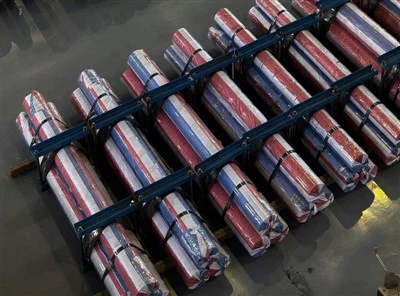
Let me cut through the fluff right away. It’s not a yes or no answer, but here’s where the confusion starts: most people mix up “regulatory requirements” with “best practices” or “industry standards.” A lot of new drillers jump in assuming every job needs NMDCs because they see it on a checklist, but veteran crews know it’s more nuanced. I’ve seen jobs where skipping NMDCs cost a company $200k in a single run, and other jobs where using them was just overkill. Let’s break this down by the regulations, the real-world science, and why as a supplier, I’d never tell you to buy NMDCs for every job—but I will tell you to stop assuming they’re optional when the rules say otherwise.
First, let’s clarify what magnetic drill collars do (and why their magnetism matters) because that’s the foundation of this debate. Traditional steel drill collars (the kind you’ve used a hundred times) are made from carbon or alloy steel—stuff that’s naturally ferrous, meaning it attracts and holds a magnetic charge. How does that happen? Over time, as you drill, you’re rotating, jarring, and applying pressure to those collars. That mechanical stress aligns the metal’s molecular structure, turning it into a permanent magnet. Even brand-new steel collars can pick up a temporary magnetism from contact with other metal parts in the drill string, or even from the earth’s magnetic field itself.
Now, why does that matter? Most modern drilling relies on logging while drilling (LWD) and measurement while drilling (MWD) tools. These tools are tiny, sensitive instruments that sit near the bottom of the drill string (in the drill collars, right above the bit). They use the earth’s magnetic field to measure azimuth (which way the bit is pointing) and inclination (how steep the well is angled). If there’s a strong magnetic field from the drill collars sitting right next to them, the LWD/MWD data gets skewed. It’s called magnetic interference, or “magnetic pull,” and it’s a huge problem—think of trying to read a compass while someone holds a big magnet 6 inches from it. You can’t trust the reading.
Okay, so why isn’t every regulation screaming about NMDCs? Let’s go through the key regulatory bodies I deal with daily. The first one is the Bureau of Safety and Environmental Enforcement (BSEE) in the U.S., which governs offshore drilling. A lot of old offshore drilling manuals I saw early in my career listed NMDCs as a “recommended best practice,” not a mandate. But about 8 years ago, BSEE updated its Well Control Rules (30 CFR Part 250, Subpart J) to add a line that’s easy to miss if you’re skimming: “For directional drilling operations where magnetic survey tools are used, operators shall demonstrate that magnetic interference from the drill string does not compromise survey accuracy.”
That’s the loophole everyone argues over. BSEE doesn’t flat-out say “use NMDCs”—it says you have to prove your survey data is accurate. If you’re drilling a vertical well where you don’t care about exact azimuth (you just need to go straight down), you might get away with using a 20-year-old steel collar. But if you’re drilling a horizontal well 10,000 feet out, or a deviated well that has to hit a target within 10 feet (not 100), you can’t just say “our data feels right.” BSEE inspectors will pull your survey logs, and if they see a discrepancy between your well path and your target that’s caused by magnetic interference, you’re looking at a stop-work order and a fine. I’ve had a customer in the Gulf of Mexico get a $120k fine last year because they skipped NMDCs on a lateral well—they thought the data was close enough, but the inspector’s third-party survey found a 15-foot deviation. That’s the kind of mistake that makes people sit up and take notice.
Then there’s ISO, the International Organization for Standardization, which sets rules for drilling worldwide. ISO 10426-2, the standard for drill collars, is even clearer: it says non-magnetic drill collars are required “when magnetic survey tools are used in wells with a deviation of more than 5 degrees, or in any well where survey accuracy is critical to well placement.” Again, it’s not a blanket rule, but it’s specific. I’ve worked with drilling teams in the North Sea, West Africa, and Southeast Asia that all cite ISO 10426-2 as their go-to for compliance—even if their local regulator doesn’t mention NMDCs, ISO is the baseline for most international jobs.
Now, let’s talk about the myths that keep people from using NMDCs when they should. The biggest one is cost. NMDCs used to be way more expensive than steel collars—like 2-3 times the price. But over the last 10 years, manufacturing has gotten better, and we’ve optimized our supply chain, so the gap is way smaller now. I tell customers all the time: a $50k NMDC set is cheaper than a $200k fine, a well re-drill, or a lost well target. Another myth is that stainless steel collars are a good substitute. Nope—most stainless steels are still ferrous, or have inconsistent magnetism, so they don’t solve the interference problem. Non-magnetic collars are made from special alloys (like austenitic steel) that have a very low magnetic permeability—meaning they barely react to magnetic fields, so they don’t mess with the LWD/MWD tools.
Wait, but what about when NMDCs really aren’t required? Let’s be real—if you’re drilling a shallow vertical well for water, or a small onshore well where you’re not using magnetic survey tools at all, then no, you don’t need NMDCs. Some of our customers are small onshore drilling companies that only use wireline surveys, which don’t rely on magnetic fields, so they skip NMDCs and save money. That makes sense. The problem is when people generalize that to every job. I had a customer last year who was drilling a 12,000-foot horizontal well for a carbon capture project—their geoscience team said they needed azimuth accuracy within 2 degrees, but the driller insisted he could use steel collars because “we’ve done it a hundred times.” Halfway through the lateral, their LWD data was off by 22 degrees, so they had to pull the whole string, switch to NMDCs, and lost 3 days of rig time. That cost them more than 5 times what a full set of NMDCs would’ve cost upfront.
Here’s the thing no regulator will tell you directly: magnetic interference isn’t just a regulatory issue—it’s a safety issue. If your well path is off because of bad survey data, you could hit an underground pipeline, a salt dome, or even another wellbore. I’ve seen near-misses where a drill string got stuck because the well was deviated more than planned, and the crew didn’t know until it was too late. NMDCs eliminate that risk. BSEE might not require them for vertical wells, but they do require you to avoid unsafe well conditions, so using NMDCs is a way to check that box, too.
Now, let’s talk about what I actually do as a NMDC supplier, because I don’t want to sound like I’m pushing a product. We don’t sell a one-size-fits-all set. First, we ask customers three questions: What kind of well are you drilling? What survey tools are you using? And what’s your accuracy requirement? If you’re drilling a vertical well with wireline surveys, we’ll tell you you don’t need our collars. If you’re drilling a horizontal well with LWD tools and a 5-foot target tolerance, we’ll tell you exactly how many NMDCs you need, and even help you calculate the right placement (they have to be right above the LWD tool, not mixed in with steel collars). We also provide documentation that works for BSEE, ISO, and other regulators, so you can show inspectors you’re compliant without digging through a 50-page manual.
Another thing: a lot of people think NMDCs are heavy, but modern NMDCs are engineered to be the same weight as steel collars, so you don’t have to adjust your drill string weight or your mud program. We’ve also got hardbanding options that match the wear resistance of steel collars, so you don’t have to worry about replacement parts or downtime. I’ve had customers who switched from steel to NMDCs report less downtime, not more, because their survey data is consistent—no more second-guessing each run, no more re-work.
Let’s wrap this up, because I don’t want to ramble too long. The short answer to “Are non-magnetic drill collars required by drilling regulations?” is: It depends. If you’re operating in the U.S. offshore (BSEE-regulated) and doing a deviated well with magnetic surveys, yes—you have to prove your data is accurate, and NMDCs are the only reliable way to do that. If you’re doing an international job following ISO standards, yes, for wells with more than 5 degrees of deviation or critical placement. If you’re doing a shallow vertical onshore well without magnetic surveys, no. The mistake most drillers make is treating it as a black-and-white rule, instead of a risk-based decision that lines up with both regulations and your project needs.

At the end of the day, I’ve been in this business long enough to know that the best drillers aren’t the ones who follow rules blindly—they’re the ones who understand the science behind them, and use the right tools to avoid costly mistakes. If you’re unsure whether NMDCs make sense for your next job, we can walk through your well plan, help you check compliance boxes, and make sure you’re not wasting money on something you don’t need, or risking fines and downtime because you skipped something you do. Hit us up anytime for a no-obligation chat—we’ve helped hundreds of drilling teams sort this out, and we can help yours too.
Non-Magnetic Drill Collar References:
- Bureau of Safety and Environmental Enforcement (BSEE). 2019. 30 CFR Part 250: Safety and Environmental Management Systems for Offshore Operations.
- International Organization for Standardization (ISO). 2015. ISO 10426-2: Petroleum and natural gas industries—Drillings and well servicing equipment—Part 2: Drill collars.
- American Petroleum Institute (API). 2020. API Recommended Practice 7G: Drilling String Design.
- BSEE Inspection Manual, Section 5: Well Design and Survey Compliance, 2021.
Shanxi Zhonghe Non-Magnetic Drill Tool Co., Ltd.
As one of the most professional non-magnetic drill collar manufacturers and suppliers in China, we also support customized service. With abundant experience, we warmly welcome you to buy high quality non-magnetic drill collar for sale here from our factory. Contact us for more details.
Address: No.168 Fenglei Street, Houma City, Linfen City, Shanxi Province, China.
E-mail: lucy@nmdrillcollar.com
WebSite: https://www.zhnmdc.com/
