Hey there, I’m Jake, and for the last six years, I’ve been working hands-on with All in One (AIO) solar street lights—from helping local municipal crews tweak setup heights for a small town in Ohio to troubleshooting a tricky warehouse project in Arizona where everyone kept overthinking the pole height. One question that pops up more than any other, I swear, is: “What’s the right installation height for these things?” It’s not as random as grabbing the tallest pole on the truck, and skimping or overdoing it can ruin the whole point of switching to solar—whether that’s saving money on electric bills or keeping a neighborhood safe after dark. Let me break this down like I would for a first-time buyer who’s staring at a pole in a warehouse lot, no fancy engineering jargon required. All in One Solar Street Light
First off, let’s ground this in how AIO solar street lights actually work. Unlike the old-school ones that have a separate solar panel, LED light, and battery (all wired to the grid), AIO models cram everything—solar panel, lithium-ion battery, LED module, even the controller—into one sealed unit. That means most AIOs mount right on top of the pole, so the height directly impacts two big things: how far the light spreads and how evenly it covers, plus how much sun the solar panel gets all day. Mess up either, and you end up with a dim lot that doesn’t hold a charge overnight, or a light so high half the glow is wasted up in the sky instead of hitting the sidewalk.
I’ve seen way too many new installers make the mistake of copying old grid-tied street light heights—usually 25 to 30 feet (about 7.5 to 9 meters)—and that’s just not right for AIOs. Why? Grid-tied lights are often way more powerful, so they can be higher and still throw light far enough. But AIOs rely on their own built-in power, so if you jack the pole too high, the LED’s light spread drops off hard, and the solar panel has to work extra hard to push light that far. Let’s get specific about the numbers, but keep it real—no stuffy industry charts that leave you more confused.
The sweet spot for most residential streets, sidewalks, or small parking lots is 12 to 18 feet (3.5 to 5.5 meters). Wait, why that range? Let’s split it by use case, because that’s the secret: there’s no one-size-fits-all, and that’s where most people go wrong. If you’re lighting a narrow residential street—say 20 to 25 feet wide—12 to 15 feet is perfect. Closer to the ground, the LED casts a wide, soft glow that hits both curbs and the street, no dark gaps between poles. I worked on a neighborhood in suburban Chicago last year that tried 20 feet poles first—we put them in, and the street looked like it had two dim, dark strips down the middle. We swapped them out for 14-foot poles, and suddenly every house’s porch was lit, no shadows hiding bike racks or fire hydrants.
If you’re dealing with a wider space—like a grocery store parking lot, a small industrial yard, or a community park pathway that’s 30 to 40 feet across—you bump that height up to 16 to 18 feet. At that height, the LED’s beam angle (most AIOs have a 120-degree beam, by the way) covers enough ground without wasting light above the area you care about. I remember a client in Texas with a 5-acre distribution center—they initially wanted 25-foot poles because they thought “taller = brighter.” Nope. We set 17-foot poles, and now every parking stall is evenly lit, no one’s struggling to load a truck at 10PM, and their solar panels are getting full sun all day because they’re not blocked by shorter trees or nearby equipment.
Wait, but what about super wide areas? Like a big highway frontage road or a commercial mall lot that’s 50+ feet across? Then you don’t just crank the pole height to 25 feet—you space the poles closer together (25 to 30 feet apart, instead of 40 to 50) and maybe go for a slightly higher pole, 20 to 22 feet max. I’ve seen guys try 30-foot poles on a 60-foot wide road, and half the light is bouncing off the sky, costing them 20% more on their electric (wait, no—solar, but their battery drains faster because the LED is wasting power on unnecessary upward light). That’s a rookie mistake, and it’s why we always ask customers to send us a quick sketch of their space before we recommend anything.
Now, the other big factor that most people sleep on: sunlight access for the solar panel. AIO solar panels are usually on the top of the unit, tilted a little (we set them to a 15-degree angle for most places, depending on latitude), so if the pole is too high, the solar panel might get blocked by nearby trees, buildings, or even the pole itself? Wait, no, the pole is in the center, but if you’re in a city with lots of tall buildings, or a neighborhood with mature oak trees, you might need to lower the pole a little so the panel isn’t shaded for part of the day. I had a customer in Seattle last year—super cloudy area, right? He tried 18-foot poles, and the panels were getting shaded by big maple trees before 2PM every day, so his lights died at 8PM in winter. We dropped the poles to 15 feet, trimmed a few low branches (no need to cut big trees!), and suddenly the panels got full sun until 5PM, and his lights lasted until 11PM even on short winter days. That’s the kind of adjustment that makes all the difference—height isn’t just about light spread, it’s about solar performance.
Also, let’s talk about the flip side: installing poles too short. I’ve seen poles as short as 8 feet for a small sidewalk, and that’s a disaster for two reasons. First, low lights cast super harsh, blinding shadows—if someone’s walking a dog at night, the light is so close it’s in their eyes, and the area right at their feet is dark, which is a tripping hazard. Second, if the pole is too short, any snow, flood, or even a overgrown bush can cover the light or the solar panel. We had a client in Minnesota who put 10-foot poles along a walking trail, and after a big snow, the panel was buried under drifts, so the lights wouldn’t charge for three days. Switched to 13-foot poles, and snow drifts never reach the panels.
Wait, are there any exceptions to these numbers? Absolutely. For example, if you’re using a high-lumen AIO light—like 6000 lumens, vs. the standard 3000 lumens for residential use—you can go a little higher, maybe 19 feet, because the brighter LED can throw light farther without gaps. If you’re in a super sunny area like Arizona or Florida, where solar panels get 10+ hours of direct sun a day, you can also go a little taller, since you don’t have to worry about draining the battery. But if you’re in a cloudy area like the Pacific Northwest or New England, stick to the lower end of the range—12 to 15 feet—to make sure your panel charges enough.
Another thing I always mention to customers: code and local guidelines. A lot of towns have rules about how high street lights can be near residential areas to avoid light pollution (that’s the annoying glare that keeps people up at night). Most places cap pole heights at 18 feet for residential streets, so if you try to go higher, you might need a variance, which is a huge hassle. Stick to the 12 to 18 foot range, and you’re almost always compliant. I had a client in Portland that tried a 20-foot pole, and the city made him tear it down because it would disrupt a nearby bird sanctuary. Moral of the story: check local rules before you pick a height.
Let me wrap this up with a quick real example, since that’s what I love most. Last spring, we did a project for a small town in Iowa—main street, 30 feet wide, no big trees, super sunny. The town’s first idea was 25-foot poles, because that’s what their old grid lights were. We talked them down to 17 feet, spaced 40 feet apart. After installation, the town’s public works director told us the lights are “way better than the old grid ones”—no dark spots, so many people walking their dogs after dinner now, and their electric bill (wait, solar, so their maintenance costs) went down 70% because the AIOs use way less power, and they didn’t have to replace bulbs every year like they did with grid lights.
Here’s the thing: the right installation height for AIO solar street lights isn’t a random number off the internet. It’s based on how wide your space is, how much sunlight your area gets, local rules, and how bright of a light you need. If you’re planning a project and have no clue where to start, don’t guess—hit us up. We’ve worked on hundreds of projects from residential streets to big industrial lots, and we can help you pick the perfect height (and the right AIO model) so your lights work as good as they look. No pressure, just solid advice from someone who’s actually installed these things, not just read about them.

When it comes to AIO solar street lights, getting the height right is the first step to a good setup. Mess it up, and you’ve wasted money on poles that don’t work right, or lights that die too early. Get it right, and you’ve got a low-maintenance, bright, eco-friendly lighting solution that lasts for years. If you’re ready to talk through your project—whether it’s a small sidewalk or a whole parking lot—reach out to us, and we’ll walk you through every step, no salesy stuff, just honest help.
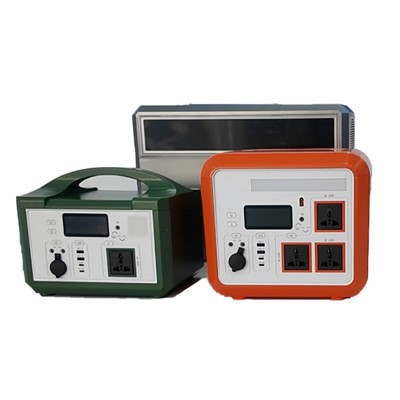
Portable Mobile Energy Storage System References
- International Dark-Sky Association. (2021). Outdoor Lighting Guidelines for Reducing Light Pollution and Improving Visibility.
- U.S. Department of Energy. (2022. Solar-Powered Outdoor Lighting Performance Standards.
- North American Electric Reliability Corporation. (2020. Off-Grid Solar Lighting Installation Best Practices for Commercial and Residential Applications.
Shandong Yaoqian Energy Storage International Trade Co., Ltd.
Address: Lithium Battery Industrial Park, Xingcheng Street, Zaozhuang High-tech Zone, Shandong Province, China
E-mail: boss@yaoqiansmart.com
WebSite: https://www.yaoqiansmart.com/
