Hey folks, let’s cut to the chase—if you’re in the market for open die forgings, you already know how critical every single step in the process is. I’m part of the team at our open die forging shop, and we’ve seen our fair share of mess-ups that boil down to one thing: botched pre-heating. It’s easy to brush off pre-heating as just “turning up the oven,” but skip the details here, and you’ll end up with defects that ruin parts, waste time, and cost you real cash. Let’s break this down straight, no corporate jargon that doesn’t mean a thing. Open Die Forgings
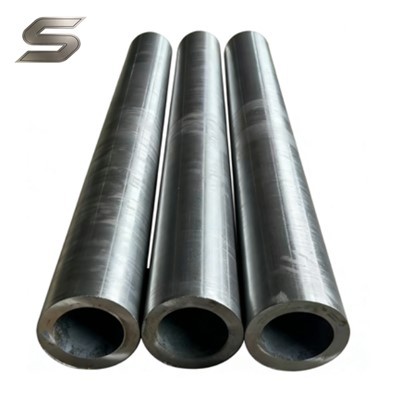
First off, let’s talk about what pre-heating even does for open die forgings. Open die forgings are those big, solid pieces we hammer and stretch between flat dies, right? Most of the time, we’re working with carbon steels, alloy steels, maybe some stainless or even nickel alloys. Pre-heating heats the raw ingot or billet to a specific temp before forging—usually 1100°C to 1250°C for carbon steels, way higher for some alloys. It softens the metal so it doesn’t crack when we hit it, gets rid of internal stresses from casting, and evens out the structure so when we forge it, it’s uniform all the way through. Mess that up, and you’re asking for trouble.
One of the most common defects we see from wrong pre-heating is thermal cracking. Let’s be real here: metal hates sudden temperature changes. If we heat a cold billet way too fast, the outer layer heats up and expands way faster than the core. The core’s still cold, so it can’t stretch with the outer part, and boom—cracks form right on the surface. I’ve walked past a furnace before and seen a forging come out with spiderweb cracks all over it, and the foreman just shook his head and said, “He cranked the heat up in 20 mins instead of 2 hours.” It’s not just surface stuff either; if the temperature difference is huge, those cracks can work their way inside, which means you’ve got to scrap the whole part, no way to fix it. Even worse, if you try to forge a cold billet without pre-heating at all? That’s a guaranteed crack before you even hit it with the first hammer blow. We had a guy try to rush a job last year, skipped pre-heating entirely, and split a 2-ton ingot clean in two. Waste of material, waste of a whole shift.
Next up, there’s uneven grain structure, which leads to something called “directions brittleness” — yeah, we made up a term here for the shop, but it’s spot on. When pre-heating is inconsistent, one part of the billet is hotter than another. Let’s say the end gets too hot, and the middle’s too cool. When we forge it, the hot end stretches way more, and the cool middle doesn’t, so the grain structure becomes lopsided. That means the part will break way easier in one direction than another. A lot of the time, customers don’t catch this until they do a pressure test or a load test on a finished part. We had a customer a few months back send back a gear blank that cracked during machining, turned out their supplier rushed the pre-heating—they loaded too many billets into the furnace at once, so the ones in the middle never got up to temp. We fixed it for them, but it’s a avoidable headache. Uneven pre-heating also causes “banding,” where you get these layers of hard and soft metal in the forging. Banding makes the part weaker overall, and it’s super hard to fix after forging—you can’t just machine it away.
Then there’s decarburization. Wait, what’s that? Oh right—when you heat steel way too hot for too long in an atmosphere that has oxygen, the carbon on the surface of the billet burns off. We’re talking micro-level stuff, but it’s a big deal. If the pre-heat temp is too high, say over 1300°C for carbon steel, the surface carbon disappears. That makes the outer layer way softer than it’s supposed to be. For parts that need to hold up to wear—like shafts, gears, or rolls—this is a killer. The soft outer layer wears down fast, and the whole part fails prematurely. We’ve had customers whose forging parts for mining equipment come back after a year of use, and the techs found the surface was decarburized because the furnace’s temp controller was off by 100°C. It’s not just high temps, either—if pre-heating time is too long, even at a normal temp, you still get decarburization. We once caught a furnace element that was failing, so it was heating unevenly and running a little long; we had to grind off the decarburized layer from a whole batch of parts, added an extra step, but saved the customer from a big replacement bill.
Wait, let’s not skip over overheating or burning. These are different from the others, but they come from wrong pre-heating too. Overheating is when you heat the metal past its critical temp—for carbon steels, that’s around 1400°C. When that happens, the grain structure gets way too big (we call it “coarse grain”), and the part becomes brittle. Forging a overheated part might work for a little while, but it’ll crack later under stress. Burning is even worse—it’s when the temp is so high that the grain boundaries start to melt. That’s a permanent defect; you can’t fix it. I’ve seen a billet that was burned just turn to dust when we tapped it with a hammer. Total loss. Some alloys are way more prone to this—like high-chromium steels or nickel-based alloys—so their pre-heating windows are way smaller. Mess up their pre-heat by even 50°C, and you’re done.
What about under-preheating? We touched on it earlier, but it’s worth repeating. If you don’t heat the billet enough, you can’t get the right forging shape without hammering way harder. That leads to deformation that’s not uniform, internal stresses that never go away, and again, cracking. Under-preheating also means the metal isn’t ductile enough, so when you try to stretch it, it splits. A lot of time, people think, “If it’s a big billet, just hit it more,” but that’s not how it works. The heat has to penetrate all the way through, not just the surface. We have rules here: for every inch of thickness, you need at least an hour of pre-heating time. No exceptions. We once bent that rule for a small job, tried to heat a 12-inch billet in 8 hours instead of 12, and it split during the first forging pass. Lesson learned—we post that rule on the furnace wall now, big and bold.
Let’s talk about something a little less obvious: residual stress. Pre-heating isn’t just to soften metal; it’s to relieve the stress from the casting process. If you don’t pre-heat correctly, that casting stress stays locked in. When you finish forging the part and cool it down, those residual stresses combine with new stresses from forging, and you get warping or cracking post-forging. We had a customer who got parts from another shop, and when they machined them, they warped so bad they couldn’t fit the gear into the housing. Turns out the other shop skipped a soak step in pre-heating—holding the part at temp for a while to let the stress dissipate. That soak step is non-negotiable, and if you rush it, you end up with parts that are “good” when they leave the shop, but fall apart later.
Now, why do people mess up pre-heating so much? It’s not just laziness, sometimes it’s cost cutting. Heating a furnace uses a ton of energy, so some shops will run it too hot too fast, or skip the soak time to get the job done quicker. But here’s the thing: you might save a few bucks on energy or labor upfront, but you’ll pay for it in scrap, rework, and customer returns. We’ve turned down jobs from customers who had bad experiences with those “cut corners” shops, and they’re always shocked when we tell them our pre-heating process is 2 hours of ramp time, 3 hours of soak, 1 hour of holding—total 6 hours for a 12-inch billet. But they see the finished parts last 10x longer than the ones they got before, so it’s worth it.
Let’s make this practical, too. If you’re ordering open die forgings, how do you make sure your supplier isn’t messing up pre-heating? Don’t be shy to ask questions. Ask them what their pre-heat temps are, how long they soak, what atmosphere they use in the furnace (nitrogen is way better than regular air for reducing decarburization), and if they test for grain structure or decarburization after pre-heating. A good open die forging shop will have logs for every single billet—furnace temp, time, soak time, atmosphere. If a supplier can’t show you those logs, that’s a red flag. We keep our logs for 10 years here, so if a customer calls up 5 years later with a part issue, we can pull it up and check what we did.

At the end of the day, pre-heating is the foundation of a good open die forging. Mess it up, and no matter how good your forging presses or hammer operators are, you’ll end up with parts that fail. We’ve been doing this for years, and we’ve fixed so many defects that came from bad pre-heating, but we’d rather prevent them in the first place. If you’re in need of open die forgings—whether it’s a small gear blank, a big shaft for wind turbines, or a roll for paper mills—we’re here to help. We can walk you through every step, answer all your questions about pre-heating and the rest of the process, and make sure you get parts that are strong, reliable, and built to last. Just reach out and let us know what you need.
Steel Lost Foam Castings References:
- “Open Die Forging: Process and Defect Prevention,” Forging Industry Association, 2022.
- “Thermal Cracking in Metal Forming Processes,” Journal of Materials Processing Technology, Vol. 125, 2002, pp. 456-462.
- “Decarburization of Carbon Steels During Heat Treatment,” Metallurgical and Materials Transactions B, Vol. 47, No. 3, 2016, pp. 1897-1905.
- “Pre-Heating Best Practices for Alloy Steel Forgings,” ASM International, 2019.
- “Residual Stress in Forgings: Causes, Effects, and Mitigation,” International Journal of Forging and Materials, Vol. 8, No. 2, 2021, pp. 78-85.
Hebei Shata Machinery Co., Ltd.
As one of the most experienced open die forging manufacturers and suppliers in China, we have advanced foundry technique and professional production team. Welcome to buy high-grade open die forging for sale here from our factory. All custom made products are with high quality and competitive price.
Address: No.11 Cangshun Rd., Shijiazhuang, Hebei, China
E-mail: Info@shatamachinery.com
WebSite: https://www.shatamachinery.com/
