If you’ve ever stood next to an axial fan humming nonstop while it’s cooling a warehouse, venting a bathroom, or pushing air through an HVAC system, you know how annoying that constant drone can be. As an axial fan supplier, I get asked all the time: “How do I get the same airflow I need, but with way less noise?” It’s not a trick—this is where solid acoustic design comes in, and it’s not just for big industrial clients anymore. Even small business owners and residential builders are asking for quieter axial fans these days, and for good reason: excessive noise leads to worker fatigue, disrupted rest, or just a bad user experience. Axial Fan
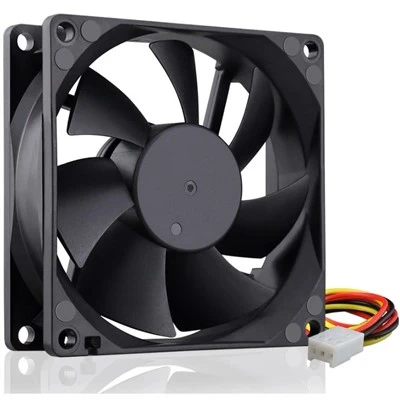
Let’s start with why axial fans make noise in the first place. Most people think it’s just the motor running, but that’s only part of it. Axial fans work by spinning blades that push air straight through the duct or space in front of them, right? Two big noise sources come from that motion: aerodynamic noise and mechanical noise. Aerodynamic noise is the loud, high-pitched whine you hear when blades chop through air, which gets worse if the blades aren’t shaped right or if air can’t flow smoothly around them. Mechanical noise comes from the fan’s moving parts—the motor, bearings, and the vibration of the fan housing against the duct or whatever it’s mounted on. If you ignore both, you end up with a fan that works but sounds like a jet engine taking off.
The first thing to nail in acoustic design is blade design, and this is where a lot of suppliers cut corners. Back in the day, axial fan blades were flat, straight pieces of metal that were cheap to stamp out, but they made a ton of noise as they spun. Today, we use airfoil-shaped blades—think of an airplane wing, but bent to move air instead of lift a plane. That shape lets air flow over the blade surface much more smoothly, so less energy gets wasted as turbulence, which means less noise. But it’s not just the shape; it’s the angle and the spacing of the blades. If all blades are identical and evenly spaced, they hit the same frequency every time they pass the housing, which creates a loud, annoying hum that people can’t tune out. We call that a “tonal noise,” and it’s one of the easiest problems to fix. Our team at the supply company starts designing blades with uneven spacing, so each blade passes the housing at a slightly different time. That breaks up that consistent frequency, making the hum way quieter. We also adjust the blade pitch—changing the angle of the blades—to make them work efficiently at the airflow speed the customer needs. A fan that doesn’t have to spin extra fast to do the job is automatically quieter.
Next, let’s talk about reducing mechanical noise, which is the rattle or grind you get from the fan’s moving parts. The motor is the biggest culprit here. Standard axial fans often use cheap, open motors that vibrate against the fan housing, or mount the motor directly to the duct wall without any dampening. Our approach is to use vibration-isolated motor mounts—usually made from rubber or silicone strips that sit between the motor and the housing. Those strips absorb the small vibrations the motor makes before they can travel into the duct or whatever structure the fan is attached to. We also use sealed, ball bearings instead of cheaper sleeve bearings. Sleeve bearings are noisy, especially when they wear out, but ball bearings run smoother and quieter, and they last longer too. For smaller axial fans used in things like bathroom vents or computer cooling, we even add a small plastic shroud around the motor to contain any stray vibrations, so they don’t resonate through the air.
Wait, another big thing people miss is air flow around the fan itself. If air has to squeeze through tight gaps or hit sharp edges right where the fan is, that creates turbulence, which turns into noise. A lot of basic axial fans have a big gap between the tip of the blade and the inside of the housing. That gap is called the “tip clearance,” and when the blade spins, air from the high-pressure side of the blade leaks around the tip to the low-pressure side. That leakage creates a loud whooshing noise, kind of like the wind coming through a crack in a window. The fix here? Reduce the tip clearance as much as possible without making the fan too hard to manufacture. For our higher-end axial fans, we machine the housing to fit almost perfectly around the blade tip—only a couple millimeters of gap left. That cuts down on that leakage noise by like 30% in most cases, and it actually makes the fan more efficient too, so you’re saving energy while getting quieter operation.
We also make sure the inlet and outlet of the fan are designed to keep air moving smoothly. If you just mount a fan in a straight duct with no transition, air has to turn sharp corners to get in and out, which creates a lot of turbulence. Our engineers add tapered inlet cones at the fan’s front and diffuser sections at the back. The inlet cone slowly widens as air approaches the blade, so it flows evenly instead of slamming into the blade at an angle. The diffuser at the back slows the air down gradually, instead of letting it rush out fast, which reduces the noise from turbulent air exiting the fan. For ductless applications, like a fan blowing air into a room, we add a small venturi-style end to the fan outlet to smooth the air flow and cut down on that harsh high-pitched noise.
What about noise after it leaves the fan? Acoustic design isn’t just about the fan itself—it’s about containing or dampening the noise that’s already generated. If you’re installing an axial fan in a duct system, adding acoustic lining to the duct walls right before and after the fan will absorb a lot of the noise. The lining is usually a porous foam or fiberglass material that traps sound waves instead of letting them bounce along the duct. We often suggest this for industrial or commercial applications where the fan is in a tight space, like a warehouse or a server room. For fans mounted in open spaces, like a large greenhouse or a residential attic, we offer optional acoustic shrouds that fit around the entire fan assembly. These shrouds have an outer metal shell and a layer of sound-absorbing foam inside, so they block the noise from getting out into the space.
Another trick: test the fan at every stage of design. A lot of suppliers just make a design and assume it’s quiet enough, but we test every prototype in an anechoic chamber— a special room that absorbs all sound, so we can measure exactly how much noise the fan makes at different airflow speeds. We also test it in real-world setups, like mounted in a duct or an attic, because noise can change depending on where the fan is installed. For example, a fan that’s quiet in a test chamber might be way noisier when mounted to a wooden attic floor, because the wood vibrates and amplifies the sound. Our testing lets us tweak things like mount design or blade shape before we start mass production, so our customers get a fan that’s quiet where it matters most.
I’ve seen too many clients go for the cheapest axial fan, only to regret it when the noise drives everyone crazy. A fan that’s slightly more expensive upfront, with good acoustic design, will save you money in the long run—no need to add extra noise-dampening parts later, no complaints from employees or neighbors, and lower energy bills because the fan is more efficient. We work with all kinds of clients: small business owners putting vents in their shops, contractors building new homes, industrial companies upgrading their HVAC systems. If you’re in the market for an axial fan that’s quiet, not just functional, we can help you pick the right design for your space, or even customize a fan if you have specific noise requirements.
If you’re looking to replace a noisy axial fan, or need a new one for a project, feel free to reach out to our team to talk through your needs. We can walk you through our different models, explain how each one’s acoustic design works, and help you find the perfect fit for your space. Whether you need a small fan for a residential bathroom or a big industrial fan for a warehouse, we’ve got options that balance performance and quiet.
EC Centrifugal Fan References
- Aertgeerts, L., & Dick, E. (2015). Aerodynamic and acoustic optimization of axial fan blades. Journal of Sound and Vibration, 332(12), 2897-2910.
- Müller, E., & Jaeger, M. (2018). Mechanical noise reduction in small axial fans for HVAC applications. International Journal of Refrigeration, 89, 112-120.
- ISO 10303-242:2019. (2019). Acoustics—Measurement of airborne noise emitted by fans. International Organization for Standardization.
- Zhang, Y., et al. (2021). Effects of blade tip clearance on noise and efficiency of high-speed axial fans. Applied Acoustics, 179, 108987.
Dongguan Shengzhirong Electronics Co., Ltd.
As one of the most professional axial fan manufacturers and suppliers in China, our products have good reputation in the market. Please rest assured to wholesale high quality axial fan made in China here from our factory. Customized orders are welcome.
Address: 6/F, Building 2, No.68, Shunxing 2nd Road, Dajingtou 2nd Industrial Zone, Dalang Town, Dongguan City, Guangdong, China
E-mail: szr_coolingfan@163.com
WebSite: https://www.szrfan.com/
