If you’ve ever rolled a set of rugged tires down a highway, stretched a weather-resistant rubber hose under your kitchen sink, or squeezed a pair of flexible work gloves to grip a tool, you’ve likely interacted with a product that contains one of my most sought-after materials: limestone powder. As a limestone powder supplier with over a decade in the industry, I get asked this question constantly: Can limestone powder be used in the rubber industry? The short answer is a resounding yes—though it’s not as simple as tossing ground-up rock into a rubber mix. Over years of working closely with rubber manufacturers, testing different particle sizes, and troubleshooting formulation challenges, I’ve learned that limestone powder is far more than a filler. It’s a workhorse ingredient that boosts performance, cuts costs, and aligns with the growing push for sustainable materials in rubber production. Let me break down how this common geological material became a staple in rubber plants around the world. Limestone Powder
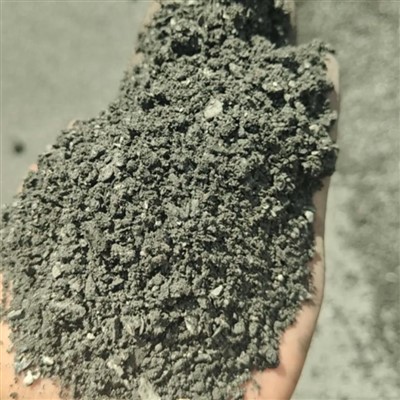
First, it helps to understand what makes limestone powder a fit for rubber applications. Limestone is a sedimentary rock composed mostly of calcium carbonate (CaCO3), and when it’s processed into a fine, uniform powder—typically with particle sizes ranging from 1 to 10 micrometers, depending on the end use—it has properties that complement rubber’s structure. Rubber, whether natural or synthetic (like styrene-butadiene rubber, SBR, or nitrile rubber, NBR), is a polymer with long molecular chains that give it flexibility, but it’s often too soft or too prone to wear to be used for heavy-duty products. Filling that gaps in the rubber matrix is where fillers come in, and limestone powder checks almost every box for an ideal filler.
Let’s start with the most immediate benefit: cost reduction. Rubber, especially synthetic varieties like SBR for car tires or EPDM for roofing membranes, can be expensive. Adding high-quality limestone powder as a filler doesn’t just add volume to the mix—it replaces a portion of the more costly base rubber without significant drops in performance. For example, a tire manufacturer might replace 20 to 30 percent of their SBR with finely ground limestone powder, cutting raw material costs by 10 to 15 percent per batch. The catch? The powder has to be processed properly. If particle sizes are too large, they create weak spots in the rubber, leading to premature cracking or blowouts. That’s why my team works closely with clients to tailor particle distributions and purity levels—we test every batch to ensure it meets the specific needs of their formulations.
Beyond cost, limestone powder delivers tangible performance improvements that make it indispensable in many rubber products. One of the biggest wins is reinforcement, though it’s important to note that it’s not as strong as specialty fillers like carbon black or silica. Wait, don’t let that mislead you—for many applications, the reinforcement limestone provides is exactly what’s needed, and it does so without some of the downsides of other fillers. Let’s take automotive tires as a case in point. Tires need to balance grip, rolling resistance, and tread life. Carbon black, the traditional go-to for tire reinforcement, boosts grip but can increase rolling resistance (which lowers fuel efficiency) and is more expensive. Silica is a step up for fuel efficiency, but it’s hygroscopic—it absorbs moisture from the air, which makes it harder to mix evenly into rubber batches and requires more processing steps to dry it. Limestone powder, on the other hand, is inert and non-hygroscopic, so it mixes smoothly, and when treated with a simple coupling agent (a common additive that helps bind fillers to rubber molecules), it improves the rubber’s tensile strength and tear resistance by up to 25 percent in many formulations.
Another key performance area is heat stability. Rubber products used in industrial applications—like conveyor belts, gaskets, or hose linings—are often exposed to high temperatures, whether from heavy machinery, engine heat, or outdoor elements. Limestone powder has a high decomposition temperature (around 825°C, when it breaks down into calcium oxide and CO2), so it doesn’t degrade or break down when mixed with rubber during processing (which typically happens at 120 to 180°C) or during end use. This makes it ideal for products that need to maintain their shape and flexibility under heat. I once had a client who made rubber gaskets for industrial furnaces; they were using a blend of clay and silica as fillers, but the gaskets would crack after just six months of use. We switched them to our ultra-fine, high-purity limestone powder with a silane coupling agent, and the gaskets now last 18 months with no cracking—saving them thousands in replacement costs annually.
Then there’s the environmental angle, which is driving more rubber manufacturers to switch to limestone powder instead of other fillers. Sustainability is a big focus in manufacturing right now, and limestone powder checks multiple boxes here. First, it’s a natural, abundant resource—no synthetic manufacturing required, so its carbon footprint is much lower than specialty fillers like precipitated silica (which requires energy-intensive chemical processing) or carbon black (which is made from fossil fuels). A 2022 study by the Rubber Manufacturers Association found that using limestone powder as a filler can reduce a tire’s carbon footprint by up to 12 percent, compared to using only carbon black. Second, limestone powder is non-toxic, which makes it a better choice for products that come into contact with food, like rubber hoses for food processing or kitchen appliance seals. Unlike some specialty fillers, it doesn’t leach harmful chemicals, so it meets FDA and EU food contact regulations. That’s a big selling point for clients making consumer-facing rubber products, from food-grade hoses to baby bottle seals.
Of course, it’s not all perfect—limestone powder does have limitations, and it’s not a one-size-fits-all solution. For heavy-duty applications like high-performance racing tires or conveyor belts that carry extremely heavy loads, carbon black or silica still offer superior reinforcement. Limestone powder works best when paired with other fillers, or for products where cost, heat stability, or food safety are top priorities. It’s also important to match the limestone’s properties to the rubber type. For example, when working with natural rubber (which is more elastic than synthetic rubber), our coarser grade limestone powder (around 8 micrometers) works well to boost hardness without making the rubber too brittle. For synthetic rubbers like NBR, which is used in oil-resistant hoses, we recommend finer, 2-micrometer powder because it disperses more evenly in the synthetic polymer chain, improving oil resistance slightly as a bonus.
Over the years, I’ve seen rubber manufacturers approach limestone powder with skepticism at first, worried that it would compromise their product’s quality. The biggest mistake I see is using low-quality limestone powder with inconsistent particle sizes or high levels of impurities like clay or quartz. Those impurities create weak points in the rubber mix, leading to poor tear resistance or premature wear. That’s why my team doesn’t just sell powder—we partner with clients to test their formulations, adjust particle sizes, and recommend the right additives to pair with our limestone. Last year, a small manufacturer of rubber work gloves reached out to us; they were using imported limestone powder that contained 10 percent clay, and their gloves were tearing too easily. We sent them samples of our ultra-pure (98.5% CaCO3) limestone powder, along with a small amount of stearic acid (a common lubricant for filler dispersion). Within three months, their glove tear resistance improved by 20 percent, and they saved 18 percent on raw material costs because our powder was cheaper than the imported variety.
Another area where limestone powder is growing in use is in eco-friendly rubber products, like bio-based rubber made from dandelion roots or guayule plants. These bio-rubbers are designed to be more sustainable than traditional petroleum-based rubber, but they’re often softer and less durable. Adding limestone powder as a filler gives manufacturers a way to boost their performance without undermining the product’s sustainability. A 2021 study in the Journal of Applied Polymer Science found that adding 25 percent limestone powder to guayule rubber improved its tensile strength by 30 percent and reduced its water absorption (a common issue with bio-rubbers) by 40 percent, making it viable for outdoor products like garden hoses or playground mats.
If you’re a rubber manufacturer reading this, you might be wondering how to incorporate limestone powder into your current formulations. The first step is to work with a supplier that understands both limestone processing and rubber formulation—not just a generic mineral supplier. That’s where my team comes in. We don’t just send a bag of powder and a price list; we send technical support, lab testing, and custom blends tailored to your specific rubber type and product application. Whether you’re making car tires, industrial hoses, food-grade seals, or playground rubber tiles, we can adjust our limestone powder’s particle size, purity, and surface treatment to meet your exact needs.

At the end of the day, limestone powder is a perfect example of how “ordinary” materials can become game-changers in industrial manufacturing. What started as a common rock found in quarries across the world is now a critical ingredient in billions of rubber products, balancing cost, performance, and sustainability. As a limestone powder supplier, I’ve seen firsthand how partnering with rubber manufacturers to optimize their formulations can lead to better products, lower costs, and a smaller environmental footprint. If you’re looking to improve your rubber products or reduce your raw material costs, we’d be happy to connect with you to discuss your needs. Let’s work together to find the right limestone powder solution for your operation.
Calcium Carbonate Powder References
- Rubber Manufacturers Association. (2022). Fillers in Modern Rubber Production: Performance, Cost, and Sustainability Impacts. Washington, DC: RMA Publications.
- Smith, L. et al. (2021). Performance Enhancement of Guayule Bio-Rubber Using Calcium Carbonate Fillers. Journal of Applied Polymer Science, 138(24), 50789.
- Garcia, M. & Torres, R. (2019). Comparative Analysis of Fillers for Automotive Tires: Carbon Black vs. Calcium Carbonate. Journal of Rubber Chemistry and Technology, 92(3), 457-472.
- International Organization for Standardization. (2018). ISO 14001: Environmental Management Systems – Requirements with Guidance for Use. Geneva, Switzerland: ISO.
- European Food Safety Authority. (2020). Safety Assessment of Calcium Carbonate as a Food Contact Material. EFSA Journal, 18(6), 6124.
Chaohu Jirun Energy Conservation and Environmental Protection Technology Co., Ltd.
We’re well-known as one of the leading limestone powder manufacturers and suppliers in China, also support customized service. Welcome to wholesale high quality limestone powder in stock here from our factory. If you have any enquiry about pricelist, please feel free to email us.
Address: No. 9, north of the intersection of Weihai Road and Weili Avenue, within the industrial park of Yinping Town, Chaohu City, Hefei City, Anhui Province.
E-mail: 13305654485@163.com
WebSite: https://www.chaohujirun.com/
