Hey there! I’m a rep from a welding robot supplier. Today, I wanna chat about how our welding robots deal with welding defects. Welding Robot
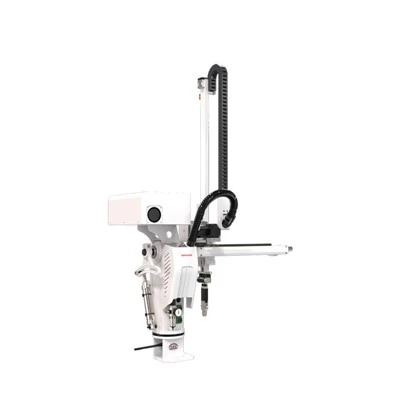
Welding defects can be a real pain in the neck for any welding operation. They can lead to a whole bunch of issues, like reduced product quality, lower efficiency, and even safety concerns. But don’t worry, our welding robots are designed to tackle these problems head – on.
Let’s start with porosity, which is one of the most common welding defects. Porosity occurs when there are small holes or cavities in the weld. This can happen due to several reasons, such as a dirty welding surface, inappropriate welding gas, or incorrect welding parameters.
Our welding robots are equipped with advanced pre – welding cleaning systems. Before starting the welding process, they can use brushes or high – pressure air to clean the surfaces to be welded. This helps to remove any dirt, oil, or rust that could cause porosity.
Moreover, we have a sophisticated gas control system. The robots can precisely control the flow rate and type of shielding gas according to the specific welding requirements. For example, in some applications where argon – based gases are needed, the robot will ensure that the right amount of argon is supplied. It monitors the gas flow in real – time and makes adjustments if necessary to prevent porosity.
The welding parameters also play a crucial role in avoiding porosity. Our robots are programmed with a wide range of welding recipes. These recipes are based on in – depth research and practical experience. The robots can automatically select the appropriate welding current, voltage, and travel speed according to the type of metal, joint design, and other factors.
Now, let’s talk about cracking. Cracking in welds can be classified into hot cracking and cold cracking. Hot cracking usually occurs during the solidification process of the weld metal, while cold cracking happens after the weld has cooled down.
To deal with hot cracking, our welding robots use a controlled cooling rate. They can adjust the heat input during welding to ensure that the weld metal cools down at an appropriate speed. This way, the internal stresses in the weld are reduced, minimizing the risk of hot cracking.
For cold cracking, we focus on the pre – heating and post – heating processes. The robots can pre – heat the base metal to a certain temperature before welding. This helps to reduce the cooling rate and prevent the formation of hard and brittle microstructures that can lead to cold cracking. After welding, the robots can also perform post – heating to relieve internal stresses and further improve the weld quality.
Another important factor in preventing cracking is the quality of the filler metal. Our robots are compatible with a variety of high – quality filler metals. Before loading the filler metal, the operator can check the specifications and quality certificates to ensure that it meets the requirements of the specific welding job. And the robots can precisely control the feeding rate of the filler metal to ensure a proper weld bead formation.
Lack of fusion is yet another welding defect that we often encounter. Lack of fusion means that the weld metal does not properly fuse with the base metal or the previous weld bead. This can be due to incorrect electrode angle, insufficient heat input, or improper cleaning.
Our welding robots are designed with intelligent sensors. These sensors can detect the position and shape of the joint in real – time. Based on this information, the robot can adjust the electrode angle automatically to ensure good contact between the weld metal and the base metal.
In terms of heat input, the robot can fine – tune the welding power according to the joint characteristics. It pays close attention to the joint gap, thickness of the base metal, etc. For example, if the joint gap is larger, the robot will increase the heat input to ensure proper fusion.
As for cleaning, as I mentioned earlier, the pre – welding cleaning process is essential. The robots make sure that the joint surfaces are clean and free of any contaminants that could prevent fusion.
Overlap is a defect where the weld bead extends beyond the edges of the joint or overlaps with the previous bead in an improper way. This can affect the appearance and strength of the weld.
Our welding robots have precise path planning capabilities. The operators can program the welding path accurately using our user – friendly software. The robot follows the programmed path with high precision, ensuring that the weld bead is deposited exactly where it should be.
During the welding process, the robot also monitors its position continuously. If there are any deviations, it can make real – time corrections to avoid overlap.
In addition to these technical features, we also offer comprehensive training and after – sales support. When you buy our welding robots, our team of experts will come to your factory and train your operators on how to use the robots effectively. They’ll teach them about the different types of welding defects, how the robots can prevent them, and what to do in case of any problems.
Our after – sales service is also top – notch. If you encounter any issues with the welding robots or have questions about dealing with welding defects, just give us a call. We’ll send our technicians to your site as soon as possible to solve the problem.
We also keep improving our welding robots based on the latest technologies and customer feedback. For example, we’re researching on using artificial intelligence to make the robots more intelligent in detecting and preventing welding defects. The AI can analyze the welding process data in real – time, learn from different welding scenarios, and make more accurate decisions to avoid defects.
In conclusion, our welding robots are well – equipped to deal with various welding defects. Whether it’s porosity, cracking, lack of fusion, or overlap, we have the solutions. With advanced cleaning systems, precise parameter control, real – time monitoring, and continuous improvement, we can ensure high – quality welding results for your products.
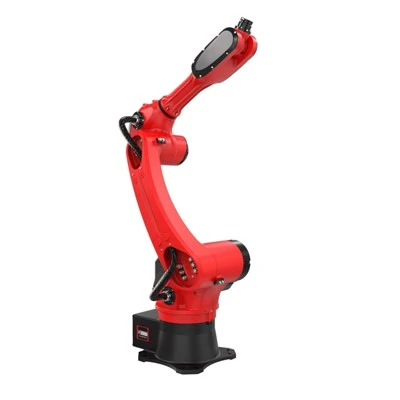
If you’re in the market for a reliable welding robot that can help you reduce welding defects and improve your production efficiency, we’d love to have a chat with you. Contact us to discuss your specific requirements and let’s see how our welding robots can fit into your operations.
Welding Robot References:
- Welding Handbook, American Welding Society
- Practical Welding Engineering, John R. Davis
Robotic Technology (GD) Co., Ltd.
Robotic Technology (GD) Co., Ltd. is one of the most experienced welding robot manufacturers and suppliers in China, also supports custom service and one year warranty. Please feel free to wholesale CE approved welding robot for sale here from our factory. Contact us for quotation.
Address: Room 102, No. 30,Hengfeng 2nd Road,Daguo, Changping Town, Dongguan City,Guangdong,China
E-mail: admin@iroboticplus.com
WebSite: https://www.rb-tic.com/
