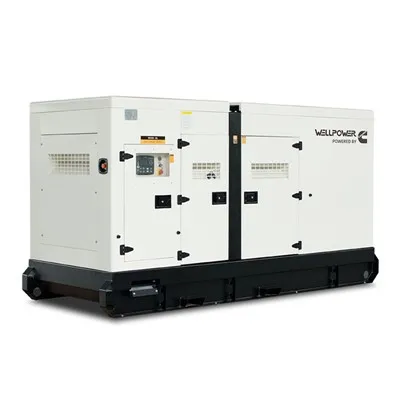
If you’ve ever found yourself staring at an industrial diesel generator set during a power outage, knowing how to start it manually isn’t just a technical skill—it’s the difference between keeping a factory’s assembly line running, a hospital’s critical equipment powered, or a small business’s inventory from spoiling. As someone who’s spent 12 years selling, troubleshooting, and training teams on industrial gensets (that’s part of our job as a supplier, by the way), I’ve seen too many people skip this step and end up with a dead unit when they need it most. Let’s walk through this properly, no shortcuts, because improper manual starting can damage your genset and void your warranty. Industrial Diesel Generator Set

First, a quick pre-check that I always run through with clients before any manual start. This isn’t busywork—it’s how we prevent breakdowns that cost thousands of dollars in downtime. Start by confirming the genset is in a “manual mode” on the control panel, not automatic. Automatic mode will try to start the unit on its own, so you want to disable that first to avoid conflicts. Next, check the fuel level: industrial gensets run on diesel, not gasoline, and I’ve had clients show up to job sites with a full tank of gas wondering why it won’t turn over. A good rule of thumb is to keep it at least 70% full to avoid air in the fuel lines, which slows starting. Then, inspect the oil level—low oil is a top cause of engine failure, so pull the dipstick, wipe it clean, reinsert it, and check that it’s between the “min” and “max” marks. If it’s low, add the right type of diesel engine oil (check your unit’s manual—most of our clients use 15W-40 for standard industrial climates). Last, check the battery connections: they need to be tight, with no corrosion on the terminals. If you see white powder, scrub it with a wire brush and a baking soda solution before starting.
Now, the manual starting process. This is specific to the industrial diesel gensets we supply, which use a mechanical recoil starter for smaller units (under 50 kW) or a hand crank for larger commercial models. Let’s break this down step by step, because rushing through this is where mistakes happen.
Step 1: Engage the air intake lever. Most industrial gensets have a choke or air intake valve on the side of the engine, near the air filter. For cold starts (below 50°F / 10°C), you want to partially close this to enrich the fuel-air mixture—too much air, and the fuel won’t ignite. For warm starts (above 50°F), you can leave it open entirely. I’ve seen clients force the choke closed on a warm unit, which floods the engine with fuel and makes it impossible to start for 10 minutes.
Step 2: Prepare the recoil starter or hand crank. For smaller units, the recoil starter is a thick rope you pull, but never yank it hard right away—give it a slow, firm pull to take up slack, then a quick, steady pull. If it doesn’t catch on the first try, don’t yank repeatedly. For larger hand crank models, stand with your feet shoulder-width apart, hold the crank firmly with both hands, and turn it clockwise until you feel resistance (that’s the compression stroke), then apply steady pressure. Never wrap the crank around your hand—if it kicks back, it can cause a broken wrist.
Step 3: Fire the ignition. Once you’ve pulled the recoil or turned the hand crank, you’ll hear a sputter or a pop. Immediately open the air intake lever slightly—if you leave it closed, the engine will stall. For most units, you’ll need to hold the recoil handle for 2-3 seconds after the engine starts, or let go of the crank once it’s running. If it stalls, wait 30 seconds, then try again—don’t keep pulling, because that can flood the engine.
Step 4: Let it warm up. Industrial gensets aren’t meant to take a full load immediately. After starting, let it run at idle for 5-10 minutes. Check the exhaust smoke—light gray is normal, black means too much fuel, white means there’s water in the fuel. If you see black smoke, slightly open the air intake a bit more. If you see white smoke, turn the unit off, drain the fuel tank, and replace it with fresh diesel—water in the fuel can damage injectors.
Now, common mistakes I see all the time from new genset owners. First, not disabling the automatic transfer switch (ATS). If the ATS is set to auto, when you start the genset manually, it will try to connect to the load while the utility power is still on, which causes a dangerous backfeed that can harm your equipment or utility workers. Always confirm the ATS is in “manual” or “off” mode before starting. Second, skipping the pre-checks. Last year, a client skipped the oil level check and started a 100 kW genset—low oil pressure caused the engine to seize, and they had to pay $8,000 for a replacement engine. Third, yanking the recoil starter. I’ve replaced 12 recoil springs in the last two years from people who yank too hard—best practice is one smooth pull, not multiple quick tugs.
If you’re starting a genset for the first time, even if you follow all the steps, it’s normal to have a few tries. Our team at the company I work for offers on-site training for all clients, so if you’re unsure, don’t hesitate to reach out. We also include a printed quick-start guide with every genset, but I always recommend doing a test run during a scheduled maintenance window, not during an emergency—you want to know it works before the power goes out.
When the unit is running, do a quick check of the gauges: oil pressure should be between 20 and 60 psi, coolant temperature between 180 and 220°F, and battery voltage around 12.6V for 12V systems, 25.2V for 24V systems. If any gauge is outside that range, turn the unit off and troubleshoot before using it.
Now, let’s talk about when manual starting is necessary. Most industrial gensets have an electric starter, but if the battery dies, or the electric starter fails, manual starting is your only option. That’s why it’s critical to know this process—you don’t want to be stuck in a blackout with a genset you can’t start. We design our gensets with redundant starting systems, so even if the electric starter fails, the manual backup is reliable.
If you’re in the market for an industrial diesel generator set, whether for a small construction site, a large manufacturing plant, or a critical facility like a data center, having a unit that’s easy to start manually is non-negotiable. That’s why we build manual starting as a standard feature across all our models, not an add-on. We also offer 24/7 technical support, so if you run into issues during a test run or an emergency, our team is just a call away.
I’ve seen firsthand how a reliable genset can mean the difference between a minor inconvenience and a major disaster. Last winter, a hospital in a rural area lost power for 12 hours—their electric starter failed, but their manual system worked, and they never lost power to their ICU. That’s the kind of reliability we strive for with every genset we supply.
If you’re ready to discuss which industrial diesel generator set is right for your needs, or if you have questions about manual starting, our team is here to help. We work with clients across industries, from small businesses to Fortune 500 companies, and we can tailor a solution that fits your power requirements and budget. Don’t wait until the next power outage to test your genset—schedule a test run, or reach out to learn more about our products and services.
Industrial Diesel Generator Set References:
- Industrial Diesel Engine Maintenance Handbook, International Association of Plumbing and Mechanical Officials, 2021
- Generator Safety and Operation Guidelines, Occupational Safety and Health Administration (OSHA), 2022
- Mechanical Recoil Starter Design for Small Industrial Engines, Society of Automotive Engineers (SAE), 2020
Jiangsu Kaichen Electric Power Equipment Co., Ltd.
We are one of the most professional industrial diesel generator set manufacturers and suppliers in China, specialized in providing high quality diesel generators with reasonable price. We warmly welcome you to buy cheap industrial diesel generator set from our factory. Contact us for pricelist and quotation.
Address: Dinghuo Industrial Park, Jiangdu District, Yangzhou, Jiangsu Province
E-mail: 19962469616@163.com
WebSite: https://www.jskaichen-power.com/
