Hey there, I’m [your company name] – and if you’re outfitting a commercial space, industrial facility, or even a sprawling data center, you know cable trays are way more than just metal frames holding wires together. One of the biggest questions we get from electricians, project managers, and building owners: how much weight can a fiberglass cable tray actually hold? I’ve lost count of times a client has asked this last minute, stressing about picking the right tray before installation. Let’s break this down like we chat in our shop – no boring jargon, just the real deets you need to avoid mistakes (and extra costs) on your project. Cable Tray
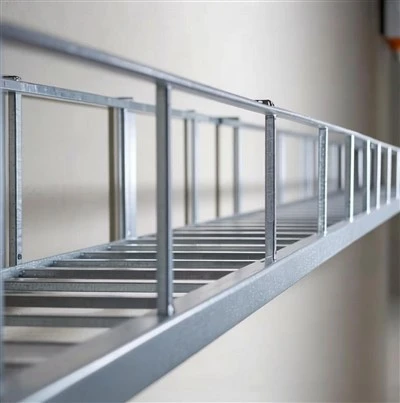
First off, fiberglass cable trays aren’t your average metal tray. Yeah, steel is strong, but it’s heavy, rusts in damp or chemical-heavy spaces, and can spark – big no-nos for food processing plants, labs, or outdoor setups. Fiberglass (which we make from resin reinforced with glass fibers) checks those boxes, but its weight capacity isn’t one-size-fits-all. That’s the key thing most folks miss: a tray’s load limit depends on way more than just the fiberglass itself. Let’s start with the basics we review with every new customer, because skipping these leads to under or overbuying.
First, the type of fiberglass tray. We stock two main types here at [your company name]: solid bottom trough trays and ladder trays. Ladder trays are the open ones, great for low-weight, high-airflow setups (like server rooms where you need to keep cables cool), while solid troughs seal out dust, moisture, or corrosive fumes – perfect for outdoor telecom or industrial chemical lines. Solid bottom trays can hold more weight than ladder trays, right? Makes sense, since there’s more material. We also have wire mesh trays for smaller, lighter cables, but those are a whole different cat.
Next, the tray’s size. A 4-inch wide tray isn’t the same as a 12-inch wide one. Wait, no – wait, not just width. Length matters too, and that’s where people mess up. Let’s say you have a 10-foot long tray span (meaning it’s mounted between two supports 10 feet apart). A 6-inch solid trough fiberglass tray with a 1/4 inch wall thickness can hold roughly 350 lbs of distributed cable weight. But if you shorten that span to 8 feet, that same tray jumps to almost 500 lbs. That’s a huge difference – we see so many clients copy a buddy’s project that had a 10-foot span and end up overloading their 8-foot one because they didn’t adjust. What’s distributed weight vs. concentrated weight? Oh, good question. Distributed is when your cables are spread evenly along the entire tray – that’s the safe, recommended way. Concentrated is when all the heavy stuff (like big power cables) is in one spot, say the middle of the tray. That drops the max load by 20-30%, because the weight’s all in one place instead of spread out.
Then there’s the load rating itself – we call it the “design load” and “actual load” around here. The design load is what we test the tray to hold in our lab, and it’s always a safe factor – we use a 4:1 safety ratio, meaning if a tray can handle 1,000 lbs in a test, its design load is 250 lbs. That’s not us being extra; fiberglass, while strong, can get temperamental if you push it, especially over time. The actual load is what you’re putting on the tray: add up all your cables, their weight per foot, and don’t forget to throw in a little extra for future expansion. Rule of thumb: never use more than 75% of the design load. Why? Cables add weight over time – upgrading your network means thicker fiber, new power lines add bulk, and if you skip the extra, you might have to replace the entire tray sooner than expected. We had a client last year who installed a 300 lbs design load tray, filled it to 280 lbs right away, then added three new power cables six months later. The tray bowed 2 inches – not a catastrophic failure, but enough to make him rework part of the run, which cost him twice what he saved on buying a slightly bigger tray upfront.
Now, let’s talk about what affects fiberglass tray strength that’s not obvious. Installation matters more than you think. If you mount a tray with flimsy brackets spaced too far apart, even a high-rated tray will sag. We recommend support brackets every 5 feet for spans up to 10 feet, and no more than 8 feet apart for longer spans. Also, don’t mount fiberglass trays near heat sources – like steam pipes or furnaces. Fiberglass resin can soften at around 200°F, which cuts its load capacity by almost half. We had a telecom client who mounted a tray next to a boiler for a factory, and after a few months, the tray sagged so bad the cables pulled loose. They didn’t even realize the heat was eating away at the fiberglass’s strength – that’s a mistake we make sure to flag for every customer.
Another big one: environment. Fiberglass is great for corrosive areas, but salt (from coastal areas or ice melt in parking garages) can weaken the resin over time, especially if it’s not UV-resistant. UV rays from the sun break down fiberglass too – so outdoor trays need to be made with UV-stabilized resin. A tray that’s fine indoors might lose 15-20% of its load capacity after a year outside without that UV coating. We test all our outdoor fiberglass trays for UV exposure for 1,000 hours, which is equivalent to 10 years of Florida sun, so we know their load stays consistent.
Let’s throw in some real examples from jobs we’ve done, to make this concrete. Last quarter, we worked on a food processing plant in the Midwest. They needed a tray for 12 power cables and 20 data lines, all in a space that’s damp from washdowns and has occasional chemical spills. They were gonna go with steel, but we talked them into fiberglass because steel would rust and break down in that environment. We measured the span: 9 feet between supports. We picked a 8-inch solid trough tray, UV-stabilized, with a design load of 520 lbs. We calculated the actual load: 380 lbs total, which is way under the 520, and even left 140 lbs for future cable additions. A year later, they hit us up saying it’s working perfectly – no rust, no sag, no issues.
Another example: a small data center in a suburban office. They needed ladder trays for fiber cables, which are lighter, so they didn’t need a solid trough. Their span was 8 feet, so we went with a 6-inch ladder tray, design load 275 lbs. The actual load was 190 lbs, which is 70% of the design load – perfect, left room for adding 5 more fiber lines when they expand next year. They would’ve gone with a smaller tray to save a few bucks, but we warned them that their initial load was almost 90% of a smaller tray’s design load, and they’d regret it when they added cables.
Wait, what about if you’re carrying really heavy cables, like 10,000V power lines? That’s where you go for thicker walled fiberglass trays, or even double-tray assemblies. A double tray is two trays mounted one above the other, so you split the load – each tray carries half, which is way stronger than a single tray that’s just thicker. We did a job for a factory with 10 heavy power cables, total weight 850 lbs. We used two 12-inch solid trough trays, wall thickness 3/8 inch, span 10 feet. Each tray’s design load is 500 lbs, so together they can hold 1,000 lbs, which is more than enough. That’s way cheaper than custom-making a single tray that can hold 850 lbs alone – double trays are a win for both strength and cost.
A lot of people ask: can you overload a fiberglass tray the same way you overload steel? The short answer is, yes, but it’s more noticeable. Steel will bend, but fiberglass will sag first, then crack, and eventually break – usually without warning, unlike steel which bends way before breaking. So you don’t want to get to that point. That’s why we emphasize not skimping on the load margin. It’s way easier to pay a little extra for a tray that can handle your current and future needs than to deal with a tray failure, which can cause power outages, downtime, or even safety issues – especially in industrial settings where heavy cables are around.
Let me also clear up a common myth: fiberglass trays are less strong than steel. That’s only true if you compare a fiberglass tray to the same size steel tray. But if you compare a fiberglass tray designed for the same load, it’s actually lighter, easier to install, and resists corrosion way better. We’ve had clients switch from steel to fiberglass cut their installation time by 30% because fiberglass is half the weight – two workers can carry a 10-foot tray easily, whereas steel of the same load needs four people. That’s a huge time-saver on jobs, which translates to less labor cost.
So how do you figure out exactly what your tray can hold? It’s not guesswork. Here’s what we recommend you do before picking a tray: 1) Calculate your total cable weight: look up the weight per foot for each cable (manufacturers list this on their specs), add them all up, and multiply by your total span length. That’s your actual load. 2) Decide if your cables will be distributed or concentrated – if they’re concentrated (like a bunch of thick power cables all in one spot), add 25% to your total load to account for the concentrated weight. 3) Pick a tray type: solid trough for heavy loads, ladder for light, open setups. 4) Add a 25% margin for future additions – no one ever regrets having extra space for new cables. 5) Factor in your environment: UV-stabilized for outdoor, chemical-resistant for industrial, and make sure your support brackets are spaced no more than 8 feet apart.
At [your company name], we don’t just sell trays – we help you figure this out. Every client gets a free load calculation check, because we know how stressful it is to pick the wrong tray. We’ve been in this business long enough to know that the worst mistakes are the ones you don’t see coming: a client who saved $50 on a tray that sagged and cost $5,000 in rework, or a coastal client who used a non-UV tray that cracked after a year and had to re-install all their cables. We don’t want that for you.

Whether you’re a contractor, a facilities manager, or a project owner, if you’re not sure which fiberglass cable tray is right for your job, we’re here to help. We’ve got a full line of trays for every application, from small office runs to large industrial complexes. Skip the guesswork, skip the mistakes – reach out to our team for a quick chat, and we’ll walk you through exactly how much your tray can hold, and which one fits your needs.
Welded Wire Mesh References:
- National Cable & Telecommunications Association. (2021). Fiberglass Cable Tray Load Rating Guidelines. NCTA Engineering Standards.
- Underwriters Laboratories. (2020). Standard for Cable Trays, UL 20A.
- Fiberglass Structures Institute. (2022). Load Capacity of Reinforced Polymer Cable Trays. FSI Technical Bulletin 12-02.
- International Code Council. (2021). International Mechanical Code, Chapter 39: Cable Tray Systems. ICC.
Hebei Shenyi Metal Products Co., Ltd.
Hebei Shenyi Metal Products Co., Ltd. is one of the most professional cable tray manufacturers and suppliers in China, featured by quality products and good service. Please rest assured to wholesale durable cable tray in stock here and get free sample from our factory. Customized orders are welcome.
Address: Gengtun Industrial Zone, Gengtun Village, Xiliangwa Township, Anping County, Hengshui City, Hebei Province
E-mail: HBshenyi@outlook.com
WebSite: https://www.shenyimetal.com/
