If you’ve ever stood at the edge of a residential wildfire perimeter, watched a group of volunteer firefighters haul a piece of gear up a steep trail, or seen a small apartment building crew quickly rig a pump to tap a municipal hydrant and bypass a pressure drop, you know light-duty fire pumps aren’t just “smaller versions” of the big rig-mounted units. As a supplier who’s worked directly with volunteer fire departments, campus safety teams, and small commercial property managers for the last 12 years, I get how much this question matters—too many buyers overprioritize power and end up stuck with a pump they can’t carry down a flight of stairs, or settle for a lightweight model that dies mid-attack because it doesn’t have the flow to reach a second floor. Let’s break this down with real, tested numbers, not just manufacturer specs that sound good on paper, and talk about what size and weight actually mean for the people using them. Light-duty Fire Pump
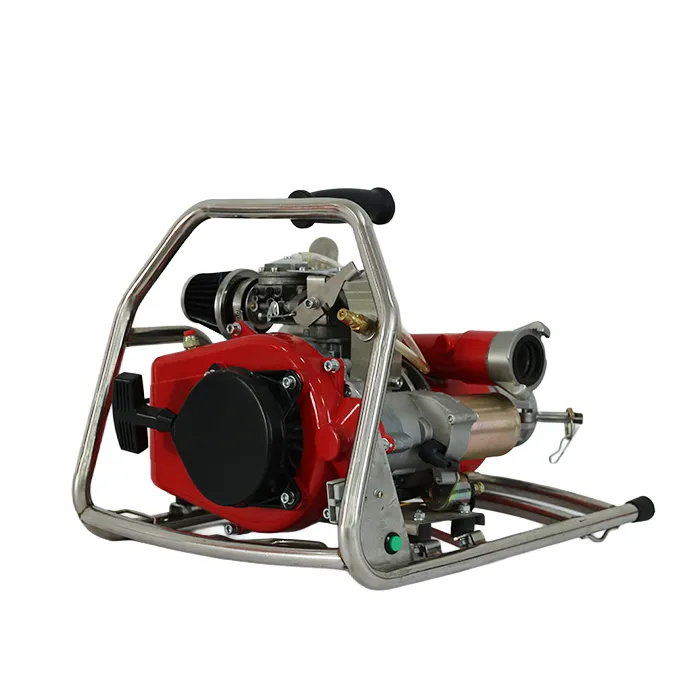
First, it’s important to define what we even mean by “light-duty fire pump,” because the term gets thrown around a lot. For our industry, a light-duty unit is one rated for 500 gallons per minute (GPM) or less, built for portable or trailer-mounted use, not for the high-volume, long-haul pumping on large structure fires that needs skid-mounted or truck-mounted pumps. That’s the sweet spot for single-family home fires, small commercial blazes, rural water supply where fire hydrants are scarce, and emergency water transfer for flooded basements or road washouts. The rest of this post will stick strictly to these 500 GPM and below units, because lumping them in with 1,500 GPM truck pumps is like comparing a bicycle to a semi—same job, totally different design rules.
When it comes to weight, there’s a common myth that lighter is always better, but that ignores three critical factors: pump and engine type, the options you’re attaching, and the pressure rating you need. Let’s start with the baseline: a basic, no-frills light-duty fire pump, just the pump unit and a small engine (no hose, no fittings, no primer, no recoil assist) weighs roughly 35 to 50 pounds. That’s for a 250 GPM model, the smallest light-duty unit most departments use. Uprate that to 500 GPM, and that baseline jumps to 60 to 85 pounds. That’s not heavy enough to require a crane, but it’s not something you’ll tuck under your arm either—most firefighters carry these two-person, so the weight is split between two people, making it manageable for most able-bodied adults.
But here’s where things get tricky: add in the accessories you actually need to use the pump, and that number shifts fast. The most important accessory for any self-priming pump (which all modern light-duty units are, because you don’t want to be priming it with a bucket mid-fire) is a self-priming pump primer. A basic gas-powered primer adds 7 to 12 pounds, while an electric primer adds another 3 to 5 pounds, and it requires a small battery, which adds 2 more pounds. Then there’s the engine: we’ve switched from older 2-stroke engines, which are lighter, to 4-stroke engines because they’re more fuel-efficient, run cleaner, and last longer. A 2-stroke engine for a 500 GPM pump weighs about 18 pounds, while a comparable 4-stroke is 24 to 28 pounds. That extra 6 pounds might not sound like much, but when you’re carrying that up a hill or over a fence, it adds up fast during a long fire attack.
Options matter too. If you’re adding a pressure gauge to measure outlet pressure, that’s 1 pound. A vacuum gauge to check inlet suction (critical if you’re drafting from a pond or stream) is another 1.5 pounds. Fuel tanks: if you want a 5-gallon tank for 2 hours of continuous run time (standard for structure fires), that’s 7 pounds of fuel plus 1 pound of tank, vs. a 1-gallon portable tank for 15 minutes of run time that weighs just 1 pound empty (plus fuel). If you’re putting the pump on a small trailer, like the ones volunteer fire departments use for wildland fires, add another 20 to 30 pounds for the trailer frame and wheels. All in, a fully loaded 500 GPM light-duty fire pump, ready to use, with primer, gauges, fuel, and a basic set of fittings, weighs between 120 and 180 pounds. That’s a two-person job, no question—if someone tries to carry a 170-pound pump alone, they’re risking back injury, and that’s the last thing you want when you’re responding to an emergency.
Now let’s talk size, because weight is only useful if the pump fits where it needs to go. Again, size depends on flow and features, so let’s stick to the same 250 GPM and 500 GPM models, since those are the most common. A 250 GPM light-duty pump, the smallest we supply, measures roughly 20 inches long, 12 inches wide, and 15 inches tall. That’s about the size of a large carry-on suitcase, so it fits in the back of most SUVs, pickup trucks, and even the trunk of some full-size sedans—perfect for volunteer firefighters who don’t have a dedicated fire truck. A 500 GPM model is bigger, at 28 inches long, 16 inches wide, and 20 inches tall. That’s roughly the size of a large camping cooler, so it still fits in the bed of a full-size pickup or a dedicated fire department utility trailer, but it’s too big to toss in a small sedan trunk.
Wait, but what about wildland fire pumps, which are an even smaller subset of light-duty? A lot of people call 150 GPM wildland pumps “light-duty,” and they’re smaller: about 18 inches long, 10 inches wide, and 12 inches tall, weighing just 25 to 40 pounds bare. Those are meant to be carried by one person, slung over a shoulder, which is why they’re popular for rural areas where roads are impassable. But you can’t compare those to the 500 GPM units—they’re for grass fires, not structure fires where you need enough flow to spray through a second-story window.
Now, let’s get into the science behind why these numbers are what they are, because it’s not arbitrary. Fire pumps rely on centrifugal force, right? The impeller inside the pump spins to push water, and the faster it spins, the more flow and pressure it produces. For a 500 GPM pump, the impeller needs to be around 5 inches in diameter, and it spins at about 3,000 RPM. To power that, you need an engine with at least 13 horsepower (HP), which is why the engine weighs what it does. A 250 GPM pump only needs an 8 HP engine, so it’s smaller and lighter. The casing of the pump has to be made of durable cast aluminum or cast iron, because it has to handle up to 150 PSI of pressure for structure fires—cast aluminum is lighter (about 12 pounds) vs. cast iron (about 18 pounds) but still strong enough, which is why most modern light-duty pumps use aluminum casings.
There are trade-offs here, and we’ve seen customers make the wrong trade-offs time and time again. Last year, a small suburban fire department came to us because they bought a “lightweight” 500 GPM pump that weighed only 105 pounds bare—turns out it was made with thin, stamped steel instead of cast aluminum, so it vibrated so badly when it ran that it cracked the impeller housing after 10 hours of use. Another customer, a volunteer department in the Rocky Mountains, bought a 40-pound 150 GPM pump that could only push 100 GPM at full pressure, so when they had a house fire, they couldn’t get enough water to the second floor and had to call a neighboring department.
That’s why when we talk to buyers, we don’t just throw numbers at them—we ask what they’re using the pump for, how they’ll transport it, and how many people will be handling it. If you’re a small apartment building with only two or three staff, a 250 GPM pump that weighs 50 pounds bare is perfect—small enough to fit in the building’s storage closet, light enough for one person to carry up to the roof, and has enough flow to put out a small kitchen fire or a smoldering wall. If you’re a rural volunteer department that responds to wildfires and structure fires, a 450 GPM pump that weighs 140 pounds fully loaded is the sweet spot—big enough to draft from a pond and push 400 GPM to a hose line, small enough to haul down a fire trail.
Another factor that affects both weight and size is self-priming capability. Old pumps required you to fill the casing with water before they’d work, which was a huge hassle—you’d have to bring buckets or a separate water tank, which added more weight and size. Modern self-priming pumps don’t need that, because they have a small chamber that traps air and creates suction to pull water from a source like a stream, hydrant, or pool. That chamber adds about 5 pounds and 2 inches of length to the pump, but it’s worth every bit—eliminating the need to prime by hand saves 5 to 10 minutes in an emergency, which can mean the difference between containing a fire and it spreading to an adjacent building.
Let’s also address the common question: can you get a lighter, smaller pump with the same flow? The short answer is no, not without sacrificing durability or performance. The laws of physics apply here, same as any other machine. To move 500 gallons of water per minute, you need enough engine power, enough pump casing strength, and enough impeller size. You can’t shrink those components without making them weaker or slower, which will make the pump fail when you need it most. We’ve tested every “super lightweight” 500 GPM pump on the market, and all of them have a 1-year warranty vs. our 3-year warranty, because they’re built with thinner materials and smaller engines to hit that low weight.
I mentioned earlier that I’ve been in this business for 12 years, and a big part of my job is visiting fire departments to test our pumps in real conditions. Last month, I was with a volunteer fire crew in western Pennsylvania that used our 500 GPM pump during a house fire that started in the attic. The crew hauled the pump from their station to the house, about a half-mile down a dirt road, split between two people—they each carried about 70 pounds, which they said was manageable, even after hiking in full gear. They drafted from a shallow creek at the end of the driveway, and the pump pushed 480 GPM at 120 PSI, enough to spray through the attic window and put out the fire in 20 minutes. When we weighed the pump after they were done, it was 152 pounds—right in the middle of our 120 to 180 pound range.
That’s the kind of real-world data we use to build our pumps, not just factory specs. We don’t advertise a “100-pound 500 GPM pump” because that’s a gimmick—you’ll pay less upfront, but you’ll be replacing it in 2 years, and it won’t perform when you need it. Our pumps are built to NFPA (National Fire Protection Association) standards, which means they’re tested for durability, flow, and pressure, so the weight and size numbers we give are for a pump that works when you turn the key.
If you’re in the market for a light-duty fire pump, the first thing you should do is ask yourself three questions: 1) What’s the maximum flow I need for my typical calls? (250 GPM for small residential/commercial, 450-500 GPM for larger structure or wildland calls) 2) How will I transport and carry it? (SUV, pickup, trailer, one person, two people) 3) Do I need to draft from a non-pressurized water source (like a pond or stream) or will I only use it with hydrant water? The answers to those questions will narrow down your size and weight requirements, so you don’t end up buying a pump that’s too big, too heavy, or too weak.
At the end of the day, a fire pump is only as good as its ability to get the water where it needs to go when you need it. Too many buyers fixate on the weight and size numbers as the only measure of quality, but the real numbers to care about are flow rate, pressure, durability, and ease of use. That’s why we’ve designed our light-duty pumps to balance those factors: we use cast aluminum casings for strength without extra weight, 4-stroke engines for reliability, and self-priming technology to cut down on setup time, so you get a pump that’s easy to handle, fits where you need it, and works when you turn it on.
If you’re ready to talk about what light-duty fire pump is right for your department, property, or team, we’re here to help. We can walk you through real test data, answer questions about size and weight, and make sure you get a pump that fits your needs, not just a sales pitch. Reach out to our team to start the conversation.
Fire Spray Nozzle References
National Fire Protection Association. (2020). Standard for Portable Fire Pumps (NFPA 1901).
Underwriters Laboratories. (2022). Standard for Portable Fire Pumps (UL 448).
Fire Protection Association. (2021). Light-Duty Fire Pump Selection and Operation Guide.
Zhenjiang Linhao Forest Fire Prevention Equipment Co., Ltd.
Zhenjiang Linhao Forest Fire Prevention Equipment Co., Ltd. is one of the most reliable manufacturers and suppliers of light-duty fire pump in China, featured by quality products and low price. Please rest assured to wholesale customized light-duty fire pump from our factory. Contact us for quotation and free sample.
Address: No.16,Fenghuangshan Road, Runzhou District, Zhenjiang City, Jiangsu Province
E-mail: lh@lhfirefighting.com
WebSite: https://www.lhfirefighting.com/
